
When a couple struggles to conceive, many people automatically assume the issue lies with female fertility. However, medical data shows a different reality:
Male factor infertility contributes to 40–50% of infertility cases worldwide.
One of the most common male fertility issues is low sperm count, medically known as oligospermia. The challenge? It often presents no obvious symptoms.
If you’re trying to conceive or simply want to understand male reproductive health better this in-depth guide will walk you through:
- What low sperm count actually means
- Early and subtle warning signs
- Medical and lifestyle causes
- How sperm is tested
- Treatment options
- Natural ways to improve sperm health
- When to see a fertility specialist
Let’s begin with the fundamentals.
What Is Low Sperm Count?
Low sperm count means that the semen contains fewer sperm than considered normal for optimal fertility.
According to the World Health Organization:
- Normal sperm concentration: 15 million sperm per milliliter (mL) or more
- Below 15 million per mL is classified as low sperm count
But sperm count is only one factor. Fertility also depends on:
- Motility (how well sperm move)
- Morphology (shape of sperm)
- Semen volume
- Overall sperm health
A man can have normal sperm count but poor motility or low count with strong motility. Fertility is multifactorial.
How Sperm Production Works
Understanding sperm biology helps clarify why problems occur.
Sperm are produced in the testicles through a process called spermatogenesis.
Key facts:
- It takes about 64–74 days to produce mature sperm
- Production requires balanced hormones (FSH, LH, testosterone)
- Testicles must remain slightly cooler than body temperature
Anything disrupting this process, hormones, temperature, toxins, or illness, can reduce sperm count.
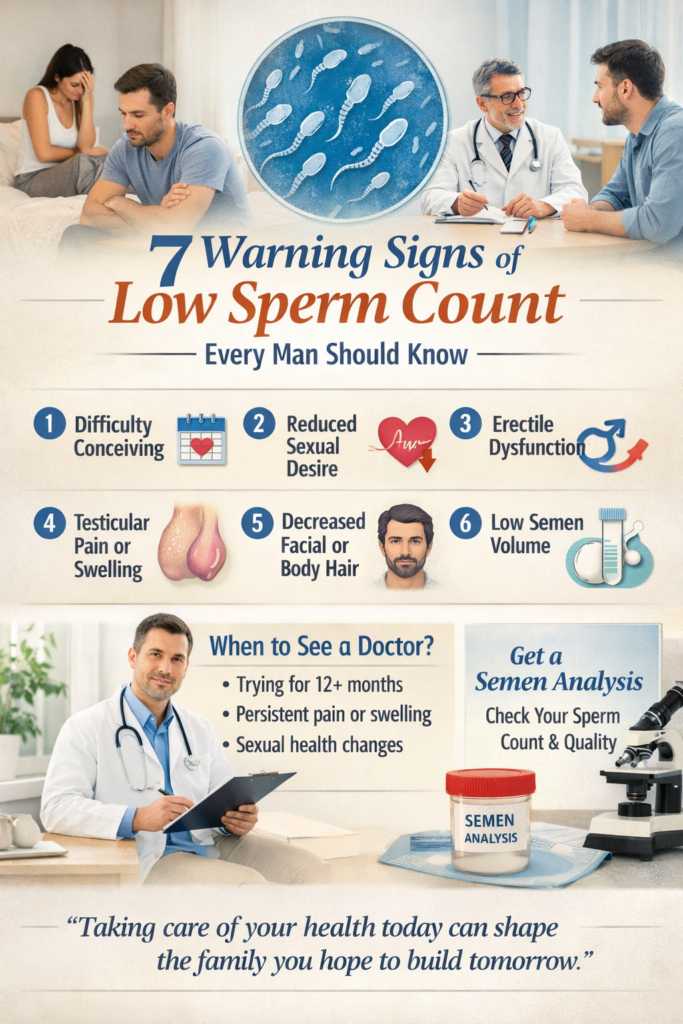
Signs of Low Sperm Count
One of the most frustrating aspects of male infertility is this:
Many men have no symptoms at all.
However, certain signs may suggest underlying issues.
- Difficulty Conceiving
The most common sign is simply:
- Inability to achieve pregnancy after 12 months of regular, unprotected intercourse
- Or 6 months if the female partner is over 35
Fertility testing should evaluate both partners simultaneously.
- Changes in Sexual Function
Hormonal imbalances may cause:
- Reduced libido
- Erectile dysfunction
- Difficulty ejaculating
- Decreased sexual satisfaction
Low testosterone can affect both sexual function and sperm production.
- Pain, Swelling, or Lump in Testicles
Conditions such as varicocele (enlarged veins in the scrotum) can impair sperm production.
Symptoms may include:
- Dull ache
- Visible veins
- Scrotal heaviness
- Swelling
Varicocele is one of the most treatable causes of male infertility.
- Reduced Body or Facial Hair
Testosterone deficiency may lead to:
- Sparse body hair
- Decreased muscle mass
- Fatigue
- Mood changes
Hormonal issues can significantly reduce sperm production.
- Low Semen Volume
Very low ejaculate volume may suggest:
- Blocked ducts
- Retrograde ejaculation
- Hormonal imbalance
Causes of Low Sperm Count
Low sperm count can result from medical, environmental, or lifestyle factors.
Medical Causes
- Varicocele
- Hormonal imbalance
- Undescended testicles
- Infections (including STIs)
- Genetic conditions
- Tumors
- Testicular trauma
- Chemotherapy or radiation
Hormonal Disorders
Sperm production depends on signals between the brain and testicles.
Hormones involved include:
- FSH (Follicle-Stimulating Hormone)
- LH (Luteinizing Hormone)
- Testosterone
Disruption in any of these can reduce sperm count.
Lifestyle Causes
Modern lifestyle factors significantly impact sperm health:
- Smoking
- Excess alcohol
- Recreational drug use
- Obesity
- Sedentary lifestyle
- Chronic stress
- Poor nutrition
Sperm are highly sensitive to oxidative stress.
Environmental Exposure
Long-term exposure to:
- Pesticides
- Heavy metals
- Industrial chemicals
- Radiation
- Excessive heat
can impair sperm production.
Frequent hot tub use, saunas, or laptops placed directly on the lap may raise scrotal temperature.
How Low Sperm Count Is Diagnosed
The primary test is a semen analysis.
It evaluates:
- Sperm concentration
- Motility
- Morphology
- Semen volume
- White blood cells
Because sperm production takes over two months, doctors may repeat the test after 2–3 months.
Additional testing may include:
- Hormone blood tests
- Scrotal ultrasound
- Genetic testing
- Post-ejaculation urine test
Treatment Options for Low Sperm Count
Treatment depends on the cause.
- Lifestyle Modification (First Line)
Improving daily habits can significantly improve sperm quality within 3 months.
Recommended changes:
- Quit smoking
- Reduce alcohol
- Maintain healthy weight
- Exercise moderately
- Improve diet
- Sleep 7–8 hours
- Manage stress
- Medical Treatment
Depending on diagnosis:
- Hormone therapy for imbalance
- Antibiotics for infection
- Surgery for varicocele
- Medication adjustments
- Assisted Reproductive Technology (ART)
If sperm count remains low:
- IUI (Intrauterine Insemination)
- IVF (In Vitro Fertilization)
- ICSI (Intracytoplasmic Sperm Injection)
ICSI allows fertilization with even a single healthy sperm.
Natural Ways to Improve Sperm Health
Evidence suggests the following may improve sperm parameters:
Optimize Nutrition
Include:
- Leafy greens
- Citrus fruits
- Nuts
- Seeds
- Fatty fish
- Whole grains
These provide antioxidants that protect sperm DNA.
Key Fertility Nutrients
With medical approval:
- Zinc
- Selenium
- Vitamin C
- Vitamin D
- CoQ10
- Omega-3 fatty acids
Exercise Regularly
Moderate exercise improves testosterone.
Avoid excessive endurance training or anabolic steroids.
Reduce Heat Exposure
- Avoid hot tubs
- Limit sauna use
- Wear breathable underwear
Manage Stress
Chronic stress raises cortisol, which can suppress testosterone.
Mindfulness, therapy, or regular relaxation techniques can help.
When to See a Fertility Specialist
Consult a specialist if:
- Trying to conceive without success
- Known hormonal issues
- History of testicular injury
- Prior cancer treatment
- Abnormal semen analysis
Early evaluation saves time and reduces uncertainty.
Emotional Impact of Male Fertility Issues
Male infertility often carries stigma.
Men may feel:
- Embarrassment
- Shame
- Guilt
- Fear of inadequacy
It’s important to understand:
Low sperm count is a medical condition, not a reflection of masculinity or worth.
Open communication and medical guidance improve outcomes and relationship resilience.
Final Takeaway
Low sperm count is common — and often treatable.
Key points:
- Many men have no symptoms
- Lifestyle plays a major role
- Testing is simple and informative
- Treatment options are highly effective
If pregnancy hasn’t happened yet, testing both partners early provides clarity and direction.
Knowledge is empowering — and proactive steps today can improve outcomes within months.