
Pregnancy brings many important decisions, and one of the most common questions expectant mothers ask is: “Should I have a vaginal birth or a C-section?” While vaginal delivery is often considered the natural method of childbirth, cesarean sections (C-sections) can be essential and life-saving in certain situations.
Understanding the differences between vaginal birth and C-section, including their benefits, risks, recovery times, and potential effects on future pregnancies, can help you feel more informed and confident as you prepare for delivery.
What Is Vaginal Birth?
A vaginal birth occurs when the baby is delivered through the birth canal. This is the most common method of childbirth worldwide and is generally recommended for healthy pregnancies without complications.
During labor, the cervix gradually dilates, contractions help move the baby down the birth canal, and the baby is delivered naturally.
Types of Vaginal Birth
- Spontaneous vaginal delivery
- Assisted vaginal delivery (forceps or vacuum)
- Induced vaginal delivery
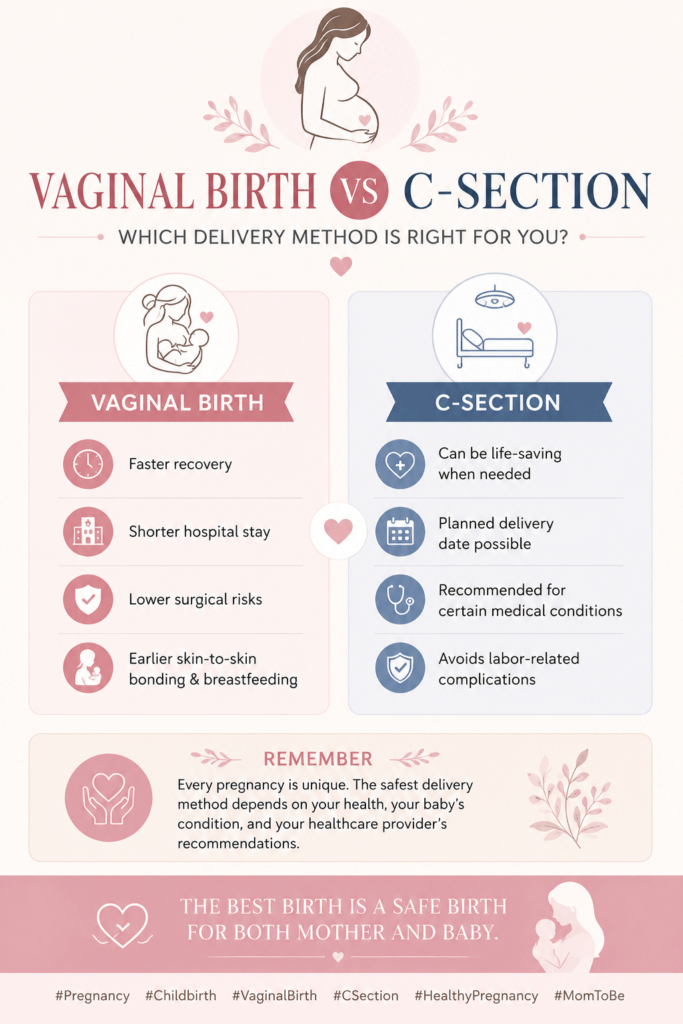
Benefits of Vaginal Birth
Faster Recovery
One of the biggest advantages of vaginal birth is the relatively quick recovery period.
Most women:
- Walk within hours after delivery
- Return home within 24–48 hours
- Resume normal activities sooner than after a C-section
Lower Risk of Surgical Complications
Since vaginal birth does not involve major surgery, mothers generally face:
- Lower infection risk
- Less blood loss
- Reduced risk of blood clots
- Fewer anesthesia-related complications
Health Benefits for the Baby
During vaginal delivery, the baby passes through the birth canal, which helps remove fluid from the lungs.
Research suggests that babies born vaginally may have:
- Lower risk of breathing difficulties at birth
- Improved exposure to beneficial maternal bacteria
- Better early immune system development
Easier Breastfeeding and Bonding
Many mothers are able to:
- Hold their baby immediately
- Begin skin-to-skin contact sooner
- Start breastfeeding shortly after delivery
Lower Risk in Future Pregnancies
Women who deliver vaginally generally face fewer complications in subsequent pregnancies compared to women who have multiple C-sections.
Risks and Challenges of Vaginal Birth
Although vaginal birth is considered safe for most pregnancies, it is not risk-free.
Vaginal Tears
The tissues around the vagina and perineum may stretch or tear during delivery.
Pelvic Floor Problems
Some women experience:
- Urinary leakage
- Pelvic organ prolapse
- Reduced pelvic floor strength
Long Labor
Labor can last several hours or even days, especially for first-time mothers.
Emergency C-Section
Even if a vaginal birth is planned, complications may require an emergency C-section.
What Is a C-Section?
A cesarean section is a surgical procedure in which the baby is delivered through incisions in the abdomen and uterus.
C-sections can be:
- Planned (elective)
- Emergency procedures
Globally, cesarean delivery rates have increased significantly over the past few decades.
Reasons a C-Section May Be Necessary
Doctors may recommend a C-section if:
Baby Is in a Breech Position
When the baby’s feet or buttocks are positioned to come out first, vaginal delivery can be risky.
Placenta Previa
The placenta partially or completely covers the cervix.
Fetal Distress
Signs that the baby is not receiving enough oxygen may require immediate delivery.
Multiple Pregnancy
Some twin or triplet pregnancies require cesarean delivery.
Previous Uterine Surgery
Certain previous surgeries can increase the risk of uterine rupture during labor.
Failure to Progress
Labor may stop progressing despite strong contractions.
Benefits of a C-Section
Can Save Lives
The most important benefit of a C-section is that it can protect the mother and baby during medical emergencies.
Predictable Delivery Date
Planned C-sections allow families and healthcare providers to schedule delivery in advance.
Avoids Labor Complications
A C-section eliminates some risks associated with labor, including:
- Severe vaginal tearing
- Certain pelvic floor injuries
- Prolonged labor complications
Useful for High-Risk Pregnancies
Conditions such as placenta previa and certain fetal abnormalities may make cesarean delivery the safest option.
Risks of a C-Section
Longer Recovery
Recovery after a cesarean section typically takes:
- 4–8 weeks
- Sometimes longer depending on complications
Increased Risk of Infection
Because it is major surgery, C-sections carry a higher risk of:
- Wound infection
- Uterine infection
- Urinary tract infection
More Postpartum Pain
Mothers often experience:
- Abdominal pain
- Difficulty standing
- Limited mobility during early recovery
Surgical Complications
Potential complications include:
- Excessive bleeding
- Blood clots
- Adverse reactions to anesthesia
Future Pregnancy Risks
Multiple cesarean deliveries may increase the risk of:
- Placenta accreta
- Placenta previa
- Uterine scar complications
Vaginal Birth vs C-Section Recovery
Vaginal Birth Recovery
Most mothers recover within a few weeks.
Common experiences include:
- Vaginal soreness
- Mild bleeding
- Temporary discomfort while sitting
C-Section Recovery
Recovery is generally longer because abdominal muscles and the uterus need time to heal.
Common experiences include:
- Incision pain
- Fatigue
- Restricted movement
- Longer physical recovery
Which Delivery Method Is Safer?
For uncomplicated pregnancies, vaginal birth is generally considered the safest option and is recommended by many healthcare professionals.
However, when medical complications are present, a C-section may significantly reduce risks for both mother and baby.
The safest delivery method depends on:
- Mother’s health
- Baby’s position
- Pregnancy complications
- Previous birth history
- Doctor’s medical assessment
Frequently Asked Questions
Is vaginal birth more painful than a C-section?
Vaginal birth involves labor pain, but recovery is often easier. C-sections avoid labor pain in planned procedures but involve surgical recovery pain afterward.
Can I have a vaginal birth after a C-section?
Many women may be candidates for a Vaginal Birth After Cesarean (VBAC), depending on their medical history and healthcare provider’s recommendations.
Which method is better for the baby?
In uncomplicated pregnancies, both methods are generally safe. However, vaginal birth may provide some respiratory and immune-system benefits for newborns.
Can I choose a C-section without a medical reason?
Policies vary by country and healthcare provider. Discuss your options, benefits, and risks with your obstetrician.
Final Thoughts
The debate between vaginal birth vs C-section is not about which method is universally better, it’s about choosing the safest option for each individual pregnancy. Vaginal birth offers faster recovery, fewer surgical risks, and potential health benefits for both mother and baby. Meanwhile, C-sections can be life-saving and are often the safest choice when complications arise.
Whether your birth plan involves a vaginal delivery or a cesarean section, the ultimate goal is the same: a healthy mother and a healthy baby. By understanding the benefits, risks, and recovery expectations of each option, you can make informed decisions and approach childbirth with greater confidence.