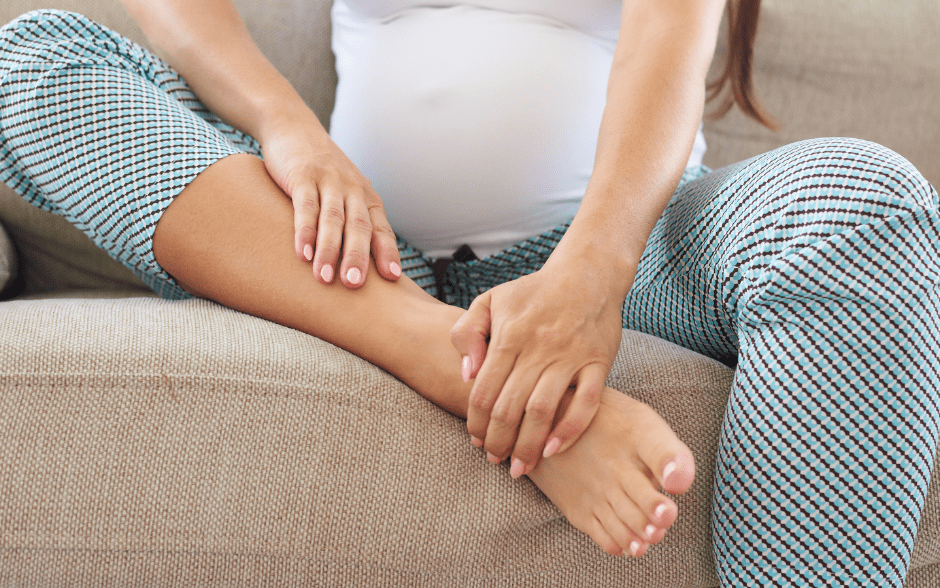
Leg cramps are a common discomfort during pregnancy, especially as pregnancy progresses. You may suddenly wake up at night with a painful tightening in your calf or find your leg muscles becoming hard and uncomfortable after standing or walking.
Although pregnancy leg cramps are usually harmless and temporary, they can be painful and disruptive. Understanding why leg cramps happen during pregnancy, when they are most common, and what may contribute to them can help you manage this common pregnancy symptom.
What Are Leg Cramps During Pregnancy?
A leg cramp is a sudden, involuntary tightening of a muscle. During pregnancy, cramps most commonly affect the calf muscles, although they can also occur in the feet or thighs.
A cramp may feel like:
- A sudden tightening or hardening of the muscle
- Sharp or intense pain
- Muscle stiffness
- A feeling that the muscle is difficult to move
- Soreness that continues for a short time after the cramp stops
Pregnancy leg cramps often happen suddenly and may last from a few seconds to several minutes.
When Do Leg Cramps Usually Start During Pregnancy?
Leg cramps can occur at any stage of pregnancy, but they are particularly common during the second and third trimesters.
As the pregnancy progresses, the growing uterus, increased body weight, changes in circulation, and greater demands on the muscles may contribute to discomfort in the legs.
Many pregnant women notice cramps at night, which can make sleeping more difficult.
Why Do Leg Cramps Happen During Pregnancy?
There isn’t always one specific cause of pregnancy leg cramps. Several physical changes that occur during pregnancy may contribute.
1. Increased Weight and Pressure
As your baby grows, your body carries additional weight. This places greater demands on the muscles and joints of the legs.
The growing uterus can also put pressure on blood vessels and surrounding structures in the pelvis, potentially affecting circulation in the lower limbs.
2. Changes in Blood Circulation
Pregnancy causes major changes in the cardiovascular system. Blood volume increases, and the growing uterus can affect blood flow from the lower body.
These circulation changes may contribute to feelings of heaviness, discomfort, and cramping in the legs.
3. Muscle Fatigue
Your leg muscles work harder as your pregnancy progresses.
Walking, standing for long periods, exercising, or simply carrying the additional weight of pregnancy can increase muscle fatigue and may make cramps more likely.
4. Changes in Physical Activity
Changes in your usual activity level can also affect your muscles.
For example, suddenly becoming much less active or doing more physical activity than your body is accustomed to may contribute to muscle discomfort.
Pregnancy-appropriate movement and regular gentle activity can help support overall physical well-being.
5. Pregnancy-Related Changes in the Body
Pregnancy involves significant hormonal, circulatory, and musculoskeletal changes. These changes can affect how your muscles and nerves function.
However, it is important to remember that the exact reason some pregnant women experience frequent leg cramps while others do not is not always clear.
Why Are Leg Cramps Worse at Night?
One of the most frustrating things about pregnancy leg cramps is that they often occur while you’re sleeping or resting at night.
During the day, you naturally move your legs and change positions frequently. At night, you may remain in one position for a longer period.
Muscle fatigue accumulated during the day, reduced movement during sleep, and pregnancy-related changes in circulation may all contribute to nighttime cramps.
A sudden calf cramp can be particularly uncomfortable because it may wake you from sleep.
Are Leg Cramps During Pregnancy Normal?
In most cases, occasional leg cramps during pregnancy are common and usually not a sign of a serious problem.
A brief cramp that comes and goes, particularly in the calf, is generally part of the physical discomforts that many women experience during pregnancy.
However, not every type of leg pain should automatically be considered a normal pregnancy cramp.
When Should You Be Concerned?
Contact your healthcare professional if you experience persistent or severe leg pain, particularly if it affects only one leg or is accompanied by:
- Noticeable swelling
- Redness or warmth
- Significant tenderness
- Skin discoloration
- Pain that does not improve
These symptoms can have causes other than an ordinary muscle cramp and may require prompt medical assessment.
If you develop sudden chest pain, difficulty breathing, coughing up blood, or severe unexplained shortness of breath along with leg symptoms, seek emergency medical attention immediately.
Does a Leg Cramp Mean You Have a Nutrient Deficiency?
You may hear that pregnancy leg cramps are caused by a lack of calcium, magnesium, potassium, or other minerals.
Nutritional status can influence muscle function, but leg cramps do not automatically mean that you have a nutrient deficiency.
Pregnancy increases the need for several nutrients, so maintaining a balanced diet and taking prenatal supplements as recommended by your healthcare professional are important.
Do not start high-dose mineral supplements specifically for leg cramps without discussing them with your doctor or midwife.
Can Leg Cramps Affect the Baby?
Ordinary muscle cramps in the legs do not usually harm the baby.
They are generally a discomfort experienced by the mother rather than a problem affecting the pregnancy itself.
However, if leg pain is severe, persistent, unusual, or associated with swelling, redness, warmth, or other concerning symptoms, it is important to have it assessed rather than assuming it is simply a pregnancy cramp.
What to Do When a Leg Cramp Happens
1. Gently Stretch the Muscle
Stretching is one of the simplest ways to help release a cramped muscle.
If the cramp is in your calf:
- Straighten your leg gently.
- Keep your heel on the floor or bed if possible.
- Slowly pull your toes upward toward your shin.
- Hold the stretch for several seconds.
- Relax and repeat gently if needed.
Avoid forcefully stretching the muscle, as this can increase discomfort.
2. Massage the Affected Area
Once the muscle begins to relax, gently massage the cramped area.
Use your hands to apply light pressure and slowly rub the muscle. This may help the muscle relax and can reduce the soreness that remains after the cramp.
3. Move Your Ankle and Foot
Gentle movement may also help.
Try slowly:
- Pointing your toes forward
- Pulling your toes toward you
- Moving your ankle in small circles
Stop if the movement causes significant pain.
4. Stand and Walk Gently
If you are able to do so safely, slowly standing up and taking a few gentle steps may help the muscle relax.
When experiencing a nighttime cramp, take your time getting out of bed, especially if you feel dizzy or unsteady.
How to Reduce Leg Cramps During Pregnancy
Relieving a cramp when it happens is helpful, but prevention can be even better.
Stay Physically Active
Regular, pregnancy-appropriate physical activity can support circulation, muscle strength, and overall well-being.
Gentle walking, swimming, stretching, or other activities recommended for your pregnancy may be beneficial.
If you have been advised to restrict physical activity, follow your healthcare professional’s recommendations.
Stretch Before Bed
Since leg cramps frequently occur at night, gentle calf stretching before going to bed may be worth trying.
A simple routine of gentle calf stretches can help keep the muscles flexible.
Avoid bouncing or forcing the stretch.
Stay Hydrated
Not drinking enough fluids can contribute to muscle discomfort.
Try to drink fluids regularly throughout the day rather than waiting until you feel very thirsty.
Your individual fluid needs can vary depending on your activity level, weather, diet, and pregnancy.
Avoid Staying in One Position for Too Long
Long periods of sitting or standing may make your legs feel tired and uncomfortable.
If possible:
- Change positions regularly.
- Take short walks.
- Move your ankles and feet while sitting.
- Avoid crossing your legs for long periods.
Small movements throughout the day can help keep your legs active.
Choose Comfortable Footwear
Supportive and comfortable shoes can make daily movement easier and may reduce strain on your legs and feet.
Especially during pregnancy, choose footwear that provides good support and feels stable when walking.
Should You Take Magnesium or Calcium for Leg Cramps?
You may see recommendations online suggesting magnesium, calcium, or other supplements for pregnancy leg cramps.
However, don’t start supplements specifically for leg cramps without speaking with your healthcare professional.
Your doctor or midwife can assess your diet, prenatal supplements, medical history, and individual nutritional needs before recommending additional supplementation.
A balanced pregnancy diet is generally the best starting point for meeting your nutritional needs.
What About Heat?
Some women find gentle warmth relaxing when their muscles feel tight after a cramp.
A warm—not excessively hot—shower or bath may help you feel more comfortable.
Avoid overheating, particularly during pregnancy. Never use extremely hot water or prolonged high heat.
When Should You Contact Your Healthcare Professional?
A typical muscle cramp usually improves after a short period.
However, seek medical advice if you have persistent, severe, or unusual leg pain, particularly if one leg becomes:
- Swollen
- Red
- Warm
- Very tender
- Noticeably different from the other leg
These symptoms can indicate a condition that needs medical assessment and should not simply be assumed to be a normal pregnancy cramp.
If you experience sudden chest pain, difficulty breathing, severe shortness of breath, or coughing up blood, seek emergency medical care immediately.
Quick Relief Checklist
When a leg cramp strikes:
Stretch → Massage → Gently move → Walk carefully → Relax
And for prevention:
Stay active → Stretch regularly → Stay hydrated → Change positions → Wear supportive footwear
How Can You Prevent Leg Cramps During Pregnancy?
There is no guaranteed way to prevent every pregnancy-related leg cramp, but these habits may help reduce discomfort.
1. Stretch Your Calves Regularly
Gentle calf stretching can help maintain muscle flexibility.
Try stretching your calves during the day and before bedtime. Stretch slowly and comfortably without bouncing or forcing the muscle.
Regular stretching may be particularly useful if you frequently experience nighttime leg cramps during pregnancy.
2. Keep Moving Throughout the Day
Pregnancy doesn’t mean you need to remain inactive unless your healthcare professional has advised otherwise.
Gentle activities such as walking, swimming, and pregnancy-appropriate exercises can help maintain muscle strength and overall fitness.
If you spend long periods sitting, get up and move around regularly when possible.
3. Drink Enough Fluids
Adequate hydration is important throughout pregnancy.
Instead of drinking large amounts at once, try to drink fluids regularly throughout the day.
Your fluid requirements may increase depending on factors such as physical activity, temperature, and your individual pregnancy.
4. Avoid Prolonged Standing
Standing for long periods can make the legs feel tired and uncomfortable.
If your daily routine requires prolonged standing, try to take regular breaks and change your position whenever possible.
Gentle ankle and foot movements while resting can also keep the legs active.
5. Wear Comfortable, Supportive Shoes
Pregnancy can change your posture, balance, and the way your body distributes weight.
Comfortable footwear with good support can make walking and standing more comfortable and may reduce unnecessary strain on your feet and legs.
6. Maintain a Balanced Pregnancy Diet
A nutritious diet provides the energy and nutrients your body needs during pregnancy.
Include a variety of:
- Fruits and vegetables
- Whole grains
- Protein-rich foods
- Dairy or suitable alternatives
- Nuts and seeds
- Other nutrient-rich foods appropriate for pregnancy
If you’re concerned that your diet may not provide enough of a particular nutrient, discuss it with your healthcare professional.
Do Pregnancy Leg Cramps Mean You Need More Magnesium?
Not necessarily.
Magnesium is important for normal muscle and nerve function, but experiencing leg cramps does not automatically mean that you have a magnesium deficiency.
Similarly, cramps should not automatically be attributed to a calcium or potassium deficiency.
If you are experiencing frequent or severe cramps, speak with your doctor or midwife before taking additional supplements.
Don’t Self-Prescribe High-Dose Supplements
Pregnancy supplements should be taken according to professional advice.
Taking excessive amounts of vitamins or minerals can be harmful, and some supplements may interact with medications or be inappropriate for certain pregnancies.
Your healthcare professional can determine whether additional supplementation is actually necessary.
A Common Myth: “Leg Cramps Are Always Just a Normal Pregnancy Symptom”
This is an important misconception to avoid.
Most ordinary pregnancy leg cramps are harmless, but not every type of leg pain during pregnancy is a simple cramp.
Certain symptoms can indicate a blood clot in a deep vein, known as deep vein thrombosis (DVT).
Pregnancy increases the risk of blood clots, so it is important to recognize warning signs.
Warning Signs You Should Not Ignore
Contact your healthcare professional promptly if you develop unusual or persistent pain in one leg, especially when accompanied by:
- Swelling in one leg
- Redness or discoloration
- Warmth over the affected area
- Significant tenderness
- Persistent pain or discomfort
- A noticeable difference between your two legs
These symptoms require medical assessment.
Seek Emergency Medical Help for Breathing Symptoms
A blood clot can sometimes travel to the lungs and cause a pulmonary embolism, which is a medical emergency.
Seek emergency medical care immediately if you experience symptoms such as:
- Sudden difficulty breathing
- Sudden or severe chest pain
- Coughing up blood
- Fainting or severe dizziness
- A rapid heartbeat associated with significant breathing difficulty
Do not wait for these symptoms to disappear on their own.
When Is a Leg Cramp Probably Just a Cramp?
A typical muscle cramp often:
- Starts suddenly
- Causes the muscle to tighten or become hard
- Lasts for a short period
- Improves with gentle stretching or movement
- May leave temporary muscle soreness afterward
However, if the pain is persistent, unusual, severe, or associated with swelling or other concerning symptoms, it is better to get medical advice.