
Morning sickness is one of the most common and often most challenging early pregnancy symptoms. Despite its name, it doesn’t only happen in the morning. For many women, nausea can strike at any time of day.
If you’re feeling constantly nauseous, exhausted, or struggling to keep food down, you’re not alone. Up to 70–80% of pregnant women experience nausea in early pregnancy.
The good news? In most cases, it’s temporary and manageable.
In this complete guide, you’ll learn:
- What causes morning sickness
- When it starts and ends
- Effective relief tips
- Safe treatment options
- When symptoms require medical attention
Let’s break it down clearly and calmly.
What Is Morning Sickness?
Morning sickness refers to nausea and vomiting during pregnancy, most commonly in the first trimester.
Despite the name:
- It can happen morning, afternoon, or night.
- Some women feel mild nausea.
- Others experience frequent vomiting.
It typically begins around week 5 or 6 of pregnancy, peaks around weeks 8–10, and improves by week 12–14.
However, some women experience symptoms longer.
What Causes Morning Sickness?
The exact cause isn’t fully understood, but several factors contribute.
- Rising hCG Levels
The hormone human chorionic gonadotropin (hCG) rises rapidly in early pregnancy.
Higher hCG levels are associated with increased nausea.
This explains why:
- Symptoms peak in the first trimester.
- Women carrying twins may experience stronger nausea.
- Increased Estrogen
Estrogen levels also rise significantly in early pregnancy, which may affect the digestive system.
- Slower Digestion
Progesterone relaxes muscles — including those in your digestive tract.
This slows digestion and may contribute to nausea and bloating.
- Heightened Sense of Smell
Many pregnant women become more sensitive to smells.
Certain odors — even mild ones — can trigger nausea.
- Evolutionary Theory
Some researchers suggest morning sickness may protect the developing baby by:
- Making women avoid potentially harmful foods
- Reducing exposure to toxins
While uncomfortable, it may have biological benefits.
Common Morning Sickness Symptoms
- Persistent nausea
- Vomiting
- Food aversions
- Sensitivity to smells
- Fatigue
- Loss of appetite
Symptoms vary widely between women.
Effective Morning Sickness Relief Tips
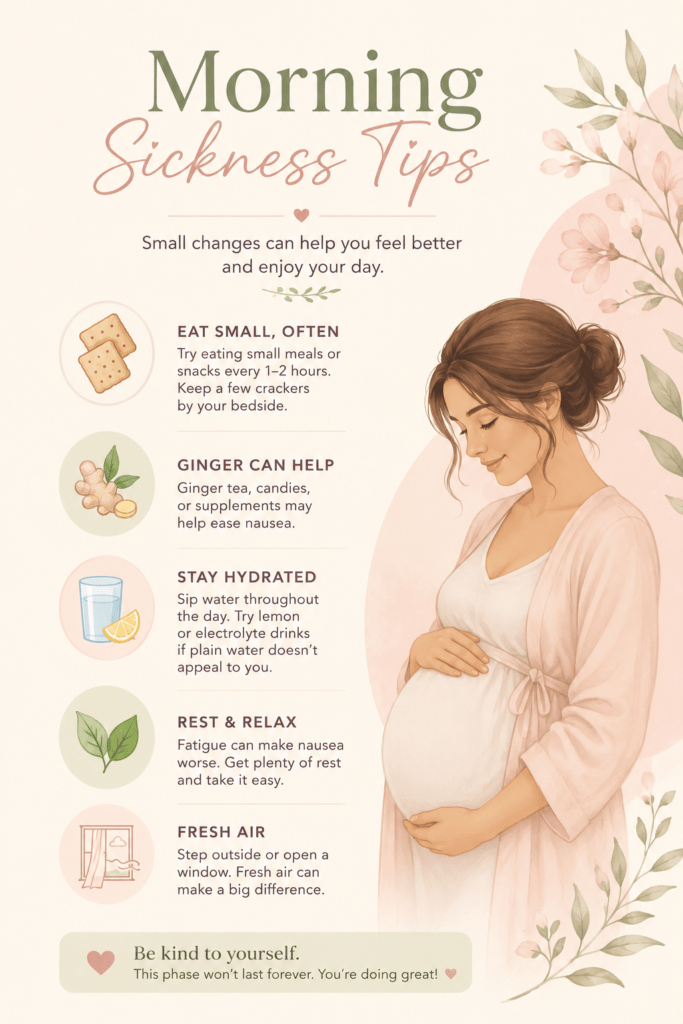
- Eat Small, Frequent Meals
An empty stomach can worsen nausea.
Try:
- Eating every 2–3 hours
- Small portions
- Dry snacks like crackers before getting out of bed
- Stay Hydrated
Dehydration makes nausea worse.
Sip:
- Water
- Lemon water
- Coconut water
- Clear broths
Take small sips throughout the day.
- Try Ginger
Ginger has been shown to reduce pregnancy-related nausea.
Options include:
- Ginger tea
- Ginger candies
- Fresh ginger in warm water
- Vitamin B6
Vitamin B6 (pyridoxine) may help reduce nausea.
Always consult your doctor before starting supplements.
- Avoid Triggers
Common triggers include:
- Strong smells
- Greasy foods
- Spicy foods
- Very sweet foods
Keep track of what worsens your symptoms.
- Get Plenty of Rest
Fatigue intensifies nausea.
Prioritize sleep and short rest periods.
- Try Acupressure Bands
Wristbands designed for motion sickness may help some women.
Evidence varies, but they are generally safe.
Foods That May Help
- Plain toast
- Rice
- Bananas
- Applesauce
- Yogurt
- Boiled potatoes
- Oatmeal
Simple, bland foods are often easier to tolerate.
What Makes Morning Sickness Worse?
- Skipping meals
- Dehydration
- Strong smells
- Stress
- Fatigue
Managing these factors can significantly reduce severity.
When to Worry: Signs of Hyperemesis Gravidarum
Most morning sickness is mild to moderate.
However, severe cases may indicate Hyperemesis Gravidarum (HG).
Seek medical care if you experience:
- Inability to keep food or fluids down
- Signs of dehydration
- Weight loss
- Dizziness or fainting
- Vomiting multiple times daily
- Dark urine
HG may require:
- Prescription medication
- IV fluids
- Nutritional support
Do not suffer in silence. Help is available.
Safe Medications for Morning Sickness
Doctors may recommend:
- Vitamin B6
- Doxylamine
- Prescription anti-nausea medications
Always consult your healthcare provider before taking medication during pregnancy.
Does Severe Morning Sickness Mean a Healthy Pregnancy?
Many women ask this.
Some studies suggest that moderate nausea is associated with lower miscarriage risk — possibly because it indicates strong hormonal support.
However:
- Lack of nausea does NOT mean something is wrong.
- Severe nausea does NOT guarantee health.
Every pregnancy is different.
Emotional Impact of Morning Sickness
Morning sickness isn’t “just nausea.”
It can cause:
- Isolation
- Guilt for not enjoying pregnancy
- Frustration
- Anxiety
It’s okay to feel overwhelmed.
You are not weak. You are growing a human.
How Long Does Morning Sickness Last?
For most women:
- Begins around week 5–6
- Peaks at week 8–10
- Improves by week 12–14
A small percentage experience symptoms into the second trimester.
Rarely, nausea continues throughout pregnancy.
Practical Daily Survival Plan
- Eat before getting out of bed.
- Avoid strong odors in the morning.
- Keep snacks nearby at all times.
- Stay hydrated consistently.
- Rest frequently.
- Ask for help when needed.
Small adjustments make a big difference.
Final Encouragement
Morning sickness can feel relentless.
But for most women, it is temporary.
Your body is undergoing massive hormonal changes to support your baby.
Focus on small wins:
- One meal tolerated
- One hydrated afternoon
- One better day
If symptoms become severe, reach out to your doctor.
You deserve support.