Irregular periods can feel confusing, stressful, and emotionally exhausting especially when your menstrual cycle suddenly changes without explanation. Whether your periods arrive too early, too late, skip entirely, or become unusually heavy or light, cycle irregularities are often your body’s way of signaling that something needs attention.
The good news is that many women can improve their menstrual health naturally through balanced nutrition, stress management, hormone-supportive habits, and healthy lifestyle changes.
In this complete guide, you’ll discover:
- What causes irregular periods
- Natural ways to regulate your cycle
- Best foods and vitamins for hormone balance
- Lifestyle habits that support regular menstruation
- When irregular periods may indicate a medical condition
What Are Irregular Periods?
A normal menstrual cycle usually occurs every 21 to 35 days. Your period may be considered irregular if:
- Your cycle length changes every month
- You skip periods frequently
- Periods come too early or too late
- Bleeding is extremely heavy or very light
- You experience spotting between periods
- Your periods suddenly stop
Occasional irregularity is common due to stress, travel, illness, or hormonal fluctuations. However, persistent irregular periods should not be ignored.
Common Causes of Irregular Periods
Understanding the root cause is the first step toward restoring hormonal balance naturally.
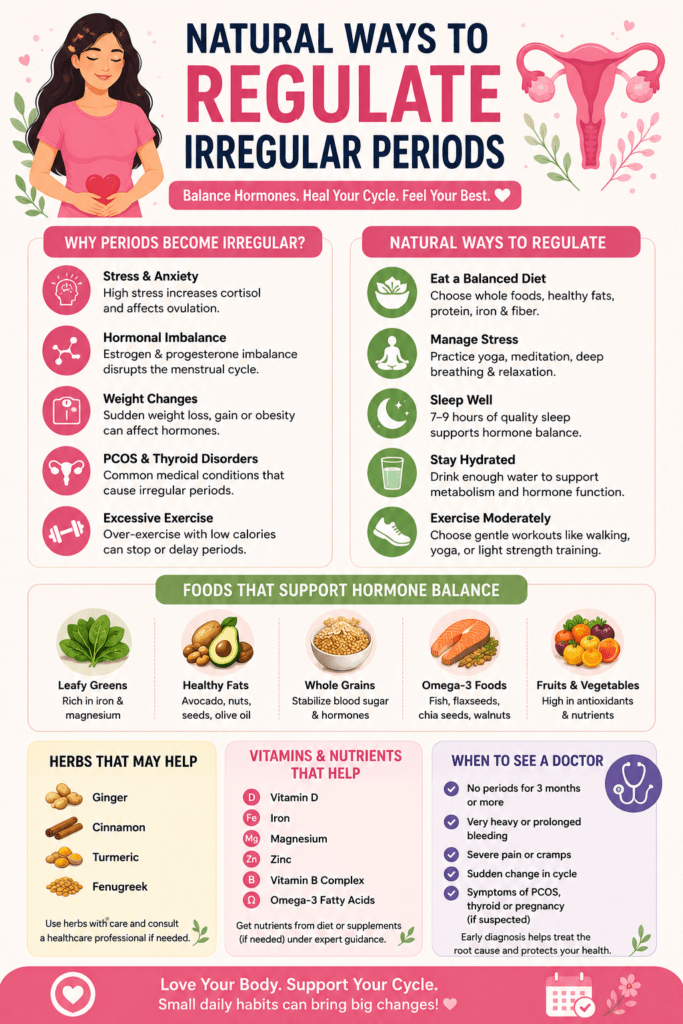
1. Stress and Anxiety
Chronic stress increases cortisol levels, which can interfere with reproductive hormones and delay ovulation. Emotional stress is one of the most common reasons for late or missed periods.
Signs stress may be affecting your cycle:
- Delayed periods
- Spotting
- PMS worsening
- Sleep disturbances
- Fatigue
2. Hormonal Imbalance
Hormones like estrogen and progesterone control your menstrual cycle. Even small imbalances can lead to irregular bleeding patterns.
Hormonal imbalance may be linked to:
- Poor sleep
- Stress
- Weight fluctuations
- Poor diet
- Medical conditions
3. Polycystic Ovary Syndrome (PCOS)
Polycystic Ovary Syndrome is one of the leading causes of irregular periods in women.
Common symptoms include:
- Missed or infrequent periods
- Weight gain
- Acne
- Excess facial hair
- Difficulty getting pregnant
4. Sudden Weight Loss or Weight Gain
Your body fat percentage directly affects estrogen production. Extreme dieting, rapid weight changes, or obesity can disrupt ovulation and menstruation.
5. Excessive Exercise
Overtraining without enough nutrition may reduce estrogen levels and cause missed periods.
This is especially common in:
- Athletes
- Dancers
- People following very low-calorie diets
6. Thyroid Problems
The thyroid gland plays a major role in regulating hormones. Both hypothyroidism and hyperthyroidism can affect menstrual cycles.
Symptoms may include:
- Fatigue
- Hair fall
- Weight changes
- Mood swings
- Irregular bleeding
Natural Ways to Regulate Irregular Periods
Understanding the root cause is the first step toward restoring hormonal balance naturally.
1. Stress and Anxiety
Chronic stress increases cortisol levels, which can interfere with reproductive hormones and delay ovulation. Emotional stress is one of the most common reasons for late or missed periods.
Signs stress may be affecting your cycle:
- Delayed periods
- Spotting
- PMS worsening
- Sleep disturbances
- Fatigue
2. Hormonal Imbalance
Hormones like estrogen and progesterone control your menstrual cycle. Even small imbalances can lead to irregular bleeding patterns.
Hormonal imbalance may be linked to:
- Poor sleep
- Stress
- Weight fluctuations
- Poor diet
- Medical conditions
3. Polycystic Ovary Syndrome (PCOS)
Polycystic Ovary Syndrome is one of the leading causes of irregular periods in women.
Common symptoms include:
- Missed or infrequent periods
- Weight gain
- Acne
- Excess facial hair
- Difficulty getting pregnant
4. Sudden Weight Loss or Weight Gain
Your body fat percentage directly affects estrogen production. Extreme dieting, rapid weight changes, or obesity can disrupt ovulation and menstruation.
5. Excessive Exercise
Overtraining without enough nutrition may reduce estrogen levels and cause missed periods.
This is especially common in:
- Athletes
- Dancers
- People following very low-calorie diets
6. Thyroid Problems
The thyroid gland plays a major role in regulating hormones. Both hypothyroidism and hyperthyroidism can affect menstrual cycles.
Symptoms may include:
- Fatigue
- Hair fall
- Weight changes
- Mood swings
- Irregular bleeding
Natural Ways to Regulate Irregular Periods
1. Maintain a Healthy Body Weight
Balancing your weight can significantly improve hormone function and ovulation.
Helpful tips:
- Avoid crash diets
- Focus on sustainable weight loss
- Eat balanced meals
- Include enough protein and healthy fats
Even losing 5–10% of body weight may help improve cycle regularity in some women.
2. Eat Foods That Support Hormonal Balance
Nutrition plays a powerful role in menstrual health.
Best foods for irregular periods:
Leafy Greens
Rich in iron and magnesium, which support healthy blood flow and hormone function.
Healthy Fats
Avocados, nuts, olive oil, and seeds support estrogen production.
Whole Grains
Help stabilize blood sugar and reduce hormone fluctuations.
Protein-Rich Foods
Eggs, fish, chicken, tofu, and legumes help hormone production and energy levels.
Omega-3 Rich Foods
Salmon, chia seeds, flaxseeds, and walnuts may reduce inflammation and PMS symptoms.
3. Reduce Sugar and Processed Foods
Excess sugar may worsen hormonal imbalances and insulin resistance, especially in women with PCOS.
Limiting:
- Sugary drinks
- Processed snacks
- Refined carbohydrates
- Fast food
may help improve menstrual regularity over time.
4. Exercise Regularly — But Don’t Overdo It
Moderate exercise supports circulation, metabolism, stress reduction, and hormonal balance.
Best exercises for hormone health:
- Walking
- Yoga
- Pilates
- Cycling
- Light strength training
- Stretching
5. Prioritize Quality Sleep
Poor sleep can affect reproductive hormones, stress levels, metabolism, and ovulation.
Tips for better hormonal sleep:
- Sleep 7–9 hours nightly
- Avoid screens before bed
- Reduce caffeine late in the day
- Maintain a consistent sleep schedule
Women with chronic sleep deprivation are more likely to experience menstrual irregularities and PMS symptoms.
6. Manage Stress Naturally
Stress management is one of the most effective natural remedies for irregular periods.
Natural stress-relief methods:
- Meditation
- Deep breathing exercises
- Journaling
- Listening to music
- Spending time outdoors
- Practicing mindfulness
- Talking with supportive friends or family
Lower stress levels may help regulate cortisol and restore ovulation naturally.
7. Stay Properly Hydrated
Hydration supports circulation, metabolism, digestion, and overall hormonal function.
Aim to:
- Drink enough water daily
- Limit sugary beverages
- Reduce excessive caffeine intake
Proper hydration may also help reduce bloating and menstrual discomfort.
8. Try Natural Herbal Remedies Carefully
Certain herbs and spices are traditionally used to support menstrual health and reduce inflammation.
Popular natural remedies for irregular periods:
Ginger
May help reduce inflammation and menstrual discomfort.
Cinnamon
Some studies suggest cinnamon may support insulin sensitivity and cycle regularity, especially in women with PCOS.
Turmeric
Contains anti-inflammatory compounds that may support hormone balance.
Fenugreek
Traditionally used to support women’s reproductive health.
Always consult a healthcare professional before using herbal supplements, especially if you are pregnant, trying to conceive, or taking medications.
Best Vitamins and Supplements for Irregular Periods
Nutrient deficiencies can affect hormone production and menstrual health.
Key vitamins that may help regulate periods:
Vitamin D
Low vitamin D levels are commonly linked to menstrual irregularities.
Iron
Important for women with heavy bleeding or fatigue.
Magnesium
May help reduce PMS symptoms and support relaxation.
Zinc
Supports hormone production and ovulation.
Vitamin B Complex
Important for energy, stress management, and reproductive health.
Omega-3 Fatty Acids
May help reduce inflammation and improve hormone balance.
Foods to Avoid if You Have Irregular Periods
Some foods may worsen inflammation, hormonal imbalance, or insulin resistance.
Try limiting:
- Excess sugar
- Processed foods
- Deep-fried foods
- Excess alcohol
- Highly processed carbohydrates
- Sugary energy drinks
A cleaner, nutrient-rich diet often improves overall menstrual health over time.
When Should You See a Doctor?
While occasional irregular periods are common, medical attention may be necessary if you experience:
- No periods for 3 months or more
- Extremely heavy bleeding
- Severe pelvic pain
- Bleeding between periods
- Sudden major cycle changes
- Symptoms of PCOS or thyroid disorders
- Difficulty getting pregnant
A healthcare provider may recommend:
- Hormone testing
- Thyroid evaluation
- Ultrasound scans
- Nutritional assessments
Early diagnosis can help prevent long-term complications.
Can Irregular Periods Affect Fertility?
Yes, irregular ovulation can make conception more difficult for some women. However, many underlying causes of irregular periods can be treated or improved through lifestyle changes and medical support.
If you are trying to conceive and your periods remain irregular for several months, fertility evaluation may be helpful.
Final Thoughts
Irregular periods are incredibly common, but they should never be ignored. Your menstrual cycle reflects your overall hormonal health, lifestyle habits, nutrition, stress levels, and physical well-being.
By focusing on:
- Healthy nutrition
- Stress reduction
- Better sleep
- Moderate exercise
- Hormonal balance
many women can naturally improve menstrual regularity and overall reproductive health.
If your symptoms persist or worsen, seeking medical advice is the safest and most effective next step toward understanding your body and restoring a healthier cycle.