
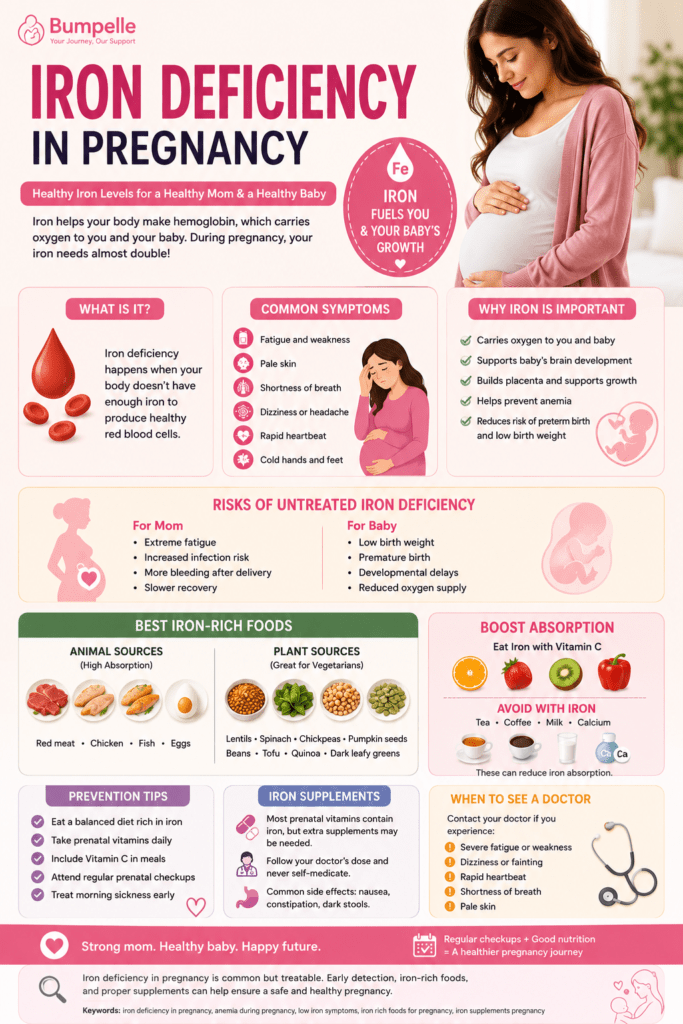
Iron deficiency in pregnancy is one of the most common nutritional problems affecting pregnant women worldwide. During pregnancy, your body needs significantly more iron to support your growing baby, placenta, and increased blood volume. When the body does not get enough iron, it can lead to iron deficiency anemia, causing fatigue, weakness, dizziness, and possible pregnancy complications.
Understanding the symptoms, causes, treatment options, and the best iron-rich foods can help protect both mother and baby throughout pregnancy.
What Is Iron Deficiency in Pregnancy?
Iron deficiency occurs when the body does not have enough iron to produce healthy red blood cells. During pregnancy, blood volume increases by nearly 50%, meaning your body must work harder to make hemoglobin the protein in red blood cells that carries oxygen.
If iron levels become too low, oxygen delivery to tissues and the baby may be reduced, leading to pregnancy anemia.
Iron deficiency can develop gradually and may become more noticeable during the second and third trimesters when the baby grows rapidly.
Why Is Iron Important During Pregnancy?
Iron plays a major role in supporting a healthy pregnancy.
Iron Helps:
- Carry oxygen throughout the body
- Support baby’s growth and brain development
- Build the placenta
- Prevent maternal anemia
- Reduce pregnancy fatigue
- Support healthy birth weight
- Lower the risk of preterm labor
Pregnant women generally need around 27 mg of iron daily, which is almost double the amount needed before pregnancy.
Common Symptoms of Iron Deficiency in Pregnancy
Many women mistake iron deficiency symptoms for normal pregnancy tiredness. However, persistent or severe symptoms should never be ignored.
Early Symptoms
- Constant fatigue
- Weakness
- Low energy
- Pale skin
- Headaches
- Feeling cold frequently
- Shortness of breath during simple activities
Moderate to Severe Symptoms
- Dizziness or fainting
- Rapid heartbeat
- Chest discomfort
- Difficulty concentrating
- Brittle nails
- Hair thinning
- Restless legs syndrome
- Severe exhaustion
Some pregnant women may also experience unusual cravings, such as craving ice, clay, or starch, a condition known as pica.
What Causes Iron Deficiency During Pregnancy?
Several factors can increase the risk of low iron levels during pregnancy.
1. Increased Blood Volume
Pregnancy naturally increases blood production, requiring much more iron than usual.
2. Poor Dietary Intake
Not eating enough iron-rich foods can quickly lead to deficiency.
3. Severe Morning Sickness
Frequent vomiting may reduce nutrient absorption and food intake.
4. Carrying Twins or Multiples
Multiple babies increase nutritional demands significantly.
5. Closely Spaced Pregnancies
The body may not fully recover iron stores between pregnancies.
6. Heavy Menstrual Periods Before Pregnancy
Women who had heavy bleeding before pregnancy may already have low iron reserves.
7. Vegetarian or Vegan Diets
Plant-based diets can absolutely support healthy pregnancies, but iron absorption from plant foods is lower compared to animal sources.
Who Is Most at Risk?
You may have a higher risk of pregnancy anemia if you:
- Were previously diagnosed with anemia
- Are underweight
- Are pregnant with twins
- Have digestive disorders affecting absorption
- Follow restrictive diets
- Experience frequent vomiting
- Have low income or poor nutrition access
Risks of Untreated Iron Deficiency During Pregnancy
Untreated iron deficiency can affect both mother and baby.
Risks for the Mother
- Extreme fatigue
- Increased infection risk
- Heart strain
- Poor tolerance during labor
- Increased postpartum bleeding risk
- Slower postpartum recovery
- Higher risk of postpartum depression
Risks for the Baby
- Low birth weight
- Premature birth
- Delayed development
- Reduced oxygen supply
- Infant anemia after birth
Severe anemia during pregnancy can become dangerous if not treated properly.
How Is Iron Deficiency Diagnosed?
Doctors usually check iron levels during routine prenatal appointments.
Common Tests Include:
Hemoglobin Test
Measures oxygen-carrying protein levels in the blood.
Ferritin Test
Checks stored iron levels in the body.
Complete Blood Count (CBC)
Provides a detailed overview of blood health.
Regular prenatal blood work helps detect anemia early before severe complications develop.
Best Iron-Rich Foods for Pregnancy
A balanced diet is one of the best ways to support healthy iron levels naturally.
Animal-Based Iron Sources (Heme Iron)
This type of iron is absorbed more efficiently by the body.
Best Sources:
- Lean red meat
- Chicken
- Turkey
- Fish
- Eggs
- Liver (consume carefully and only with medical guidance due to vitamin A levels)
Plant-Based Iron Sources (Non-Heme Iron)
These foods are excellent options, especially for vegetarians.
Best Sources:
- Spinach
- Lentils
- Chickpeas
- Kidney beans
- Black beans
- Tofu
- Pumpkin seeds
- Quinoa
- Broccoli
- Dark leafy greens
Iron-Fortified Foods
Many everyday foods are fortified with iron.
Examples:
- Breakfast cereals
- Oatmeal
- Whole grain bread
- Pasta
- Rice products
How to Increase Iron Absorption Naturally
Your body absorbs iron better when combined with vitamin C.
Eat Iron With:
- Oranges
- Lemons
- Kiwi
- Tomatoes
- Strawberries
- Bell peppers
For example, adding lemon juice to spinach or drinking orange juice with iron-rich meals may improve absorption.
Foods and Drinks That Reduce Iron Absorption
Certain foods can block iron absorption if consumed together with iron-rich meals or supplements.
Avoid Taking Iron With:
- Tea
- Coffee
- Milk
- Calcium supplements
- High-calcium foods
Try separating iron supplements and dairy products by at least two hours.
Iron Supplements During Pregnancy
Most prenatal vitamins already contain iron, but some women may require additional supplementation.
Common Types of Iron Supplements
- Ferrous sulfate
- Ferrous fumarate
- Ferrous gluconate
- Liquid iron supplements
Your healthcare provider will recommend the correct dosage based on blood test results.
Common Side Effects of Iron Tablets
Iron supplements can sometimes cause digestive discomfort.
Possible Side Effects:
- Constipation
- Nausea
- Stomach pain
- Bloating
- Dark-colored stools
Tips to Reduce Side Effects
- Drink plenty of water
- Increase fiber intake
- Take supplements after meals if advised
- Stay physically active
Never stop prescribed iron supplements without consulting your doctor.
Can Iron Deficiency Be Prevented During Pregnancy?
In many cases, yes.
Prevention Tips
- Eat iron-rich foods regularly
- Attend prenatal appointments
- Take prenatal vitamins consistently
- Combine iron with vitamin C
- Avoid skipping meals
- Treat morning sickness early if severe
Early prevention is easier than treating severe anemia later in pregnancy.
When Should You Contact a Doctor?
Seek medical attention immediately if you experience:
- Severe dizziness
- Fainting
- Chest pain
- Extreme shortness of breath
- Rapid heartbeat
- Severe weakness
These symptoms may indicate moderate to severe anemia requiring urgent evaluation.
Frequently Asked Questions About Iron Deficiency in Pregnancy
Is iron deficiency common during pregnancy?
Yes. Iron deficiency anemia is one of the most common pregnancy-related nutritional deficiencies worldwide.
Can low iron affect my baby?
Yes. Severe untreated anemia may increase the risk of low birth weight, premature birth, and developmental concerns.
Which trimester needs the most iron?
Iron needs increase significantly during the second and third trimesters because of rapid fetal growth and expanding blood volume.
Can I get enough iron from food alone?
Some women can, but many pregnant women still require supplements due to increased iron demands.
How long does it take to improve iron levels?
With proper treatment, many women begin feeling better within a few weeks, though full recovery may take several months.
Final Thoughts
Iron deficiency in pregnancy is extremely common, but early diagnosis and proper treatment can make a major difference for both mother and baby. Eating iron-rich foods, taking prenatal supplements consistently, and attending regular prenatal checkups are key steps toward a healthy pregnancy.
If you suspect low iron levels, do not ignore persistent fatigue or weakness. Speaking with your healthcare provider early can help prevent complications and support a safer, healthier pregnancy journey.