
Body weight plays a major role in reproductive health, hormone balance, and fertility. Many women and couples trying to conceive often ask whether being overweight or underweight can affect their chances of getting pregnant naturally. The answer is yes, both excess weight and low body weight may impact ovulation, menstrual cycles, egg quality, sperm health, and overall fertility.
However, fertility is complex, and weight is only one piece of the puzzle. Understanding the connection between body weight and fertility can help you make healthier choices that support conception and pregnancy.
Can Weight Affect Fertility?
Yes. Weight can directly influence reproductive hormones and the body’s ability to ovulate regularly.
Your body fat percentage helps regulate important hormones such as:
- Estrogen
- Progesterone
- Insulin
- Testosterone
When body weight is too high or too low, these hormones may become imbalanced, making it harder to conceive naturally.
Weight-related fertility issues can affect:
- Ovulation
- Menstrual cycles
- Egg quality
- Implantation
- Pregnancy maintenance
- Sperm production in men
Even moderate weight changes can sometimes improve fertility outcomes.
How Being Overweight Can Affect Fertility
Being overweight or obese may interfere with hormone function and reproductive health.
Common Fertility Problems Linked to Excess Weight
1. Irregular Ovulation
Excess body fat can disrupt ovulation, making periods irregular or absent.
Without regular ovulation, conception becomes more difficult.
2. Hormonal Imbalance
Overweight women may produce excess estrogen from fat tissue, affecting normal reproductive hormone cycles.
This imbalance can interfere with:
- Egg release
- Implantation
- Pregnancy support
3. Increased Risk of PCOS
Obesity is strongly linked with Polycystic Ovary Syndrome (PCOS), one of the leading causes of infertility.
PCOS symptoms may include:
- Irregular periods
- Weight gain
- Acne
- Excess facial hair
- Difficulty conceiving
4. Insulin Resistance
Excess weight may increase insulin resistance, which can worsen hormonal imbalance and ovulation problems.
5. Reduced Fertility Treatment Success
Women with obesity may sometimes experience:
- Lower IVF success rates
- Reduced egg quality
- Increased miscarriage risk
- Higher pregnancy complications
How Being Underweight Can Affect Fertility
Being underweight can also negatively affect fertility.
When the body lacks enough fat stores or nutrients, it may reduce reproductive hormone production to conserve energy.
Common Effects of Being Underweight
1. Irregular or Missing Periods
Low body fat may stop ovulation completely.
This condition is known as hypothalamic amenorrhea.
2. Low Estrogen Levels
Insufficient estrogen can affect:
- Egg release
- Uterine lining development
- Implantation
3. Nutritional Deficiencies
Poor nutrition may reduce fertility by affecting:
- Egg quality
- Hormone production
- Overall reproductive health
4. Increased Risk of Miscarriage
Severe underweight conditions may increase pregnancy complications and miscarriage risk.
Does Weight Affect Male Fertility?
Yes. Weight can affect male fertility too.
How Obesity May Affect Men
Excess weight may contribute to:
- Lower testosterone
- Poor sperm count
- Reduced sperm movement
- Erectile dysfunction
- Hormonal imbalance
Obesity may also increase inflammation and oxidative stress, which can damage sperm quality.
How Being Underweight May Affect Men
Men who are severely underweight may also experience:
- Reduced sperm production
- Hormonal changes
- Nutritional deficiencies affecting fertility
Healthy fertility depends on overall physical health in both partners.
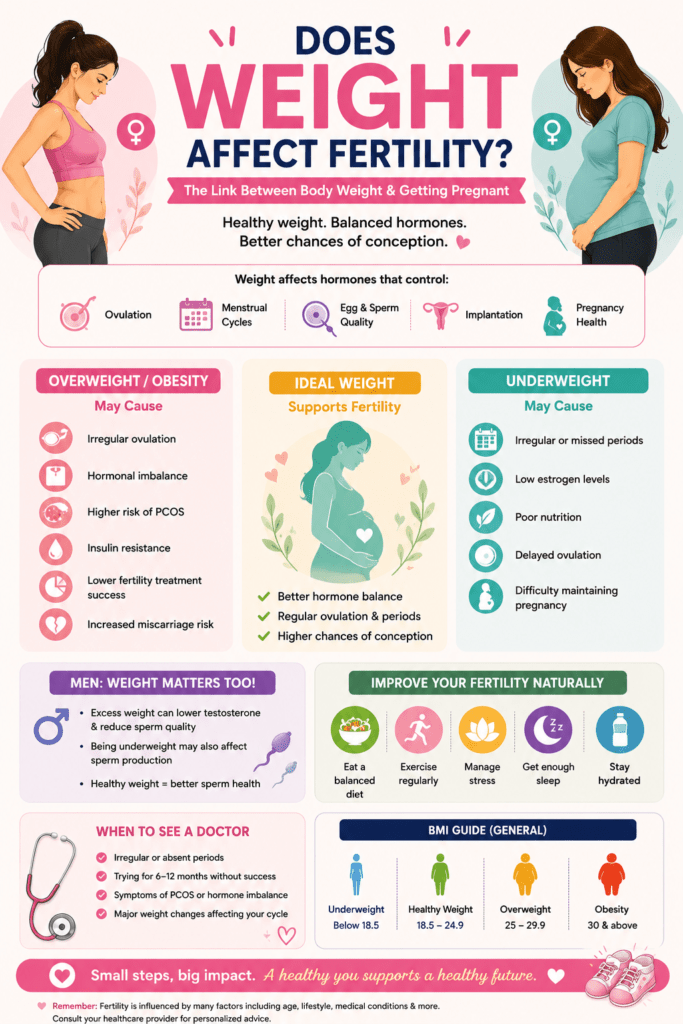
What Is the Best Weight for Fertility?
Doctors often use Body Mass Index (BMI) as a general fertility guideline.
BMI Categories
- Underweight: Below 18.5
- Healthy Weight: 18.5–24.9
- Overweight: 25–29.9
- Obesity: 30 or higher
However, BMI is not perfect. Muscle mass, metabolic health, age, lifestyle, and hormone balance also matter.
Some people with a normal BMI may still have fertility issues, while others outside the “ideal” range may conceive naturally without difficulty.
Can Losing Weight Improve Fertility?
For many overweight women, moderate weight loss may improve reproductive health significantly.
Studies show that losing just 5–10% of body weight may help:
- Restart ovulation
- Improve menstrual regularity
- Balance hormones
- Increase natural pregnancy chances
- Improve IVF outcomes
Healthy gradual weight loss is safer and more effective than crash dieting.
Can Gaining Weight Improve Fertility?
Yes. Women who are underweight may improve fertility by restoring healthy nutrition and body fat levels.
Weight gain may help:
- Restart periods
- Restore ovulation
- Improve estrogen levels
- Support implantation
Proper medical and nutritional guidance is important.
Best Diet for Fertility and Healthy Weight
A nutrient-rich diet can support hormone balance and reproductive health.
Fertility-Friendly Foods
Protein Sources
- Eggs
- Fish
- Chicken
- Lentils
- Beans
- Greek yogurt
Healthy Fats
- Avocados
- Nuts
- Olive oil
- Seeds
Complex Carbohydrates
- Oats
- Brown rice
- Whole grains
- Sweet potatoes
Antioxidant-Rich Foods
- Berries
- Leafy greens
- Tomatoes
- Citrus fruits
Foods That May Negatively Affect Fertility
Excessive intake of certain foods may affect hormone balance and overall health.
Limit:
- Sugary drinks
- Ultra-processed foods
- Excess alcohol
- Trans fats
- Excessive fast food
Moderation is more sustainable than strict restriction.
Exercise and Fertility
Regular physical activity supports:
- Hormone balance
- Weight management
- Insulin sensitivity
- Stress reduction
Best Exercises for Fertility
- Walking
- Yoga
- Swimming
- Pilates
- Moderate strength training
However, excessive intense exercise may reduce ovulation in some women.
Balance is important.
Stress, Weight & Fertility Connection
Stress may indirectly affect fertility by influencing:
- Eating habits
- Sleep quality
- Hormone levels
- Menstrual cycles
Managing stress can support both physical and emotional reproductive health.
Helpful stress-management techniques include:
- Meditation
- Journaling
- Therapy
- Deep breathing
- Gentle exercise
Weight, PCOS & Infertility
PCOS is one of the most common causes of infertility in women and is strongly connected to insulin resistance and weight gain.
Symptoms of PCOS
- Irregular periods
- Acne
- Hair thinning
- Weight gain
- Difficulty conceiving
- Excess facial hair
Lifestyle changes often help improve ovulation and fertility outcomes in women with PCOS.
When Should You See a Fertility Doctor?
Speak with a healthcare professional if:
- Your periods are irregular or absent
- You suspect hormonal imbalance
- You have PCOS symptoms
- You have been trying for pregnancy for over 12 months
- You are over age 35 and have been trying for 6 months
- Significant weight changes affect your cycle
A fertility specialist can evaluate both medical and lifestyle factors.
Frequently Asked Questions
Can losing belly fat improve fertility?
In some cases, reducing excess abdominal fat may improve hormone balance and ovulation.
Can obesity cause infertility?
Obesity may increase the risk of ovulation problems, hormonal imbalance, and pregnancy complications.
Can being too skinny stop ovulation?
Yes. Very low body fat may prevent regular ovulation and menstruation.
Does weight affect IVF success?
Weight may influence fertility treatment outcomes, but many women still conceive successfully through IVF.
Can men improve fertility through weight loss?
Yes. Healthy weight management may improve testosterone levels and sperm quality.
Final Thoughts
Weight can significantly affect fertility in both women and men, but it is not the only factor involved in conception. Healthy nutrition, balanced hormones, regular exercise, stress management, and medical support all play important roles in reproductive health.
Rather than focusing on rapid weight loss or unrealistic body standards, aim for sustainable lifestyle habits that support your overall well-being. Even small health improvements may positively impact fertility and increase your chances of a healthy pregnancy.