
Polycystic Ovary Syndrome (PCOS) is one of the leading causes of female infertility worldwide. Many women diagnosed with PCOS worry that they may never become pregnant but having PCOS does not mean pregnancy is impossible. In fact, many women with PCOS successfully conceive naturally or with fertility treatment.
PCOS affects hormones, ovulation, insulin levels, and menstrual cycles, all of which can influence fertility. Understanding how PCOS impacts the body can help you manage symptoms, improve ovulation, and increase your chances of a healthy pregnancy.
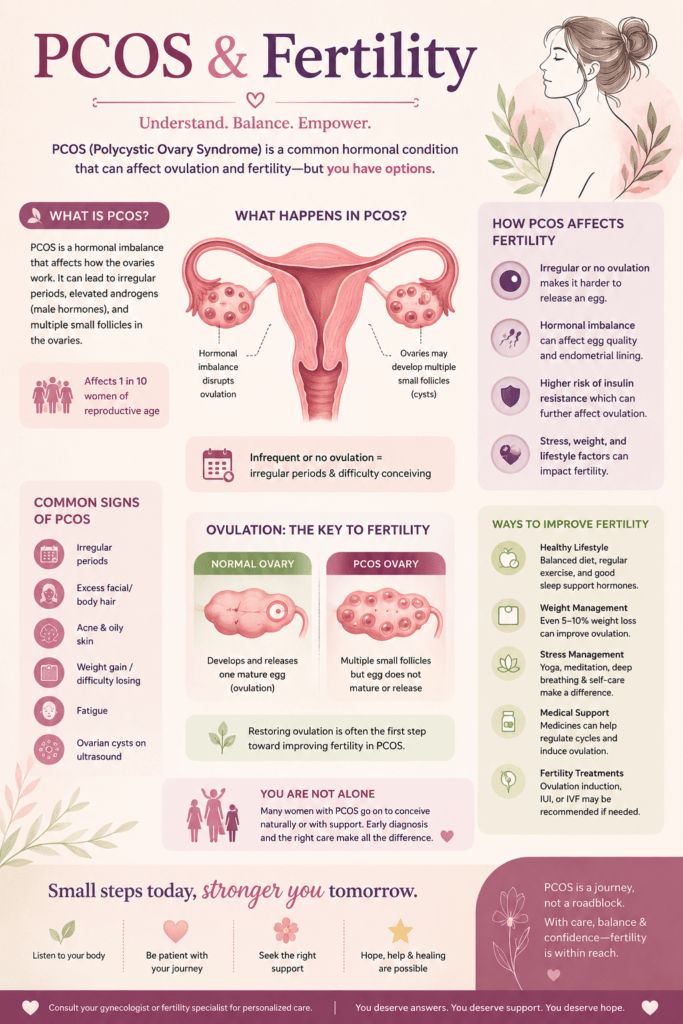
What Is PCOS?
PCOS (Polycystic Ovary Syndrome) is a common hormonal disorder that affects women during their reproductive years.
Women with PCOS often experience:
- Irregular periods
- Ovulation problems
- High androgen (male hormone) levels
- Weight gain
- Acne
- Excess facial or body hair
- Difficulty getting pregnant
The condition affects hormones responsible for egg development and ovulation.
Despite the name, not all women with PCOS develop ovarian cysts.
How Does PCOS Affect Fertility?
PCOS mainly affects fertility by disrupting normal ovulation.
1. Irregular Ovulation or No Ovulation
In many women with PCOS, eggs do not mature or release properly from the ovaries.
This may cause:
- Irregular menstrual cycles
- Missed periods
- Difficulty predicting ovulation
- Reduced chances of conception
Without ovulation, pregnancy cannot occur naturally.
2. Hormonal Imbalance
PCOS causes imbalances in reproductive hormones including:
- Testosterone
- Estrogen
- LH (Luteinizing Hormone)
- Insulin
These hormonal changes can interfere with:
- Egg quality
- Ovulation
- Implantation
- Menstrual regularity
3. Insulin Resistance and PCOS
Many women with PCOS have insulin resistance, meaning the body struggles to use insulin properly.
High insulin levels may:
- Increase male hormone production
- Trigger weight gain
- Worsen ovulation problems
- Increase inflammation
Insulin resistance is one reason why weight management often improves fertility in women with PCOS.
4. Weight Gain and Fertility Challenges
PCOS is commonly associated with abdominal weight gain.
Excess weight may worsen:
- Hormone imbalance
- Ovulation issues
- Insulin resistance
- Pregnancy complications
However, lean women can also have PCOS and fertility difficulties.
Can You Get Pregnant Naturally With PCOS?
Yes, many women with PCOS become pregnant naturally.
Even if ovulation is irregular, spontaneous ovulation can still happen. Lifestyle changes, hormone balance, and medical support may significantly improve fertility.
Some women conceive naturally after improving:
- Diet
- Weight management
- Exercise habits
- Stress levels
- Sleep quality
Others may require fertility medications or treatments.
Common Symptoms of PCOS
PCOS symptoms vary from person to person.
Common Signs Include:
- Irregular or absent periods
- Difficulty getting pregnant
- Weight gain
- Acne
- Oily skin
- Excess facial or body hair
- Hair thinning
- Dark skin patches
- Fatigue
- Mood changes
Some women discover they have PCOS only after struggling to conceive.
How Is PCOS Diagnosed?
Doctors diagnose PCOS based on symptoms, hormone levels, and ovarian function.
Diagnosis May Include:
- Medical history review
- Menstrual cycle evaluation
- Blood hormone tests
- Ultrasound scan
- Insulin and glucose testing
There is no single test for PCOS, so doctors often rule out other hormonal disorders first.
Best Ways to Improve Fertility With PCOS Naturally
1. Healthy Weight Loss
For overweight women with PCOS, losing just 5–10% of body weight may:
- Improve ovulation
- Regulate periods
- Balance hormones
- Increase natural pregnancy chances
- Improve fertility treatment success
Small sustainable changes are more effective than extreme dieting.
2. Follow a PCOS Fertility Diet
A healthy diet can improve insulin resistance and hormone balance.
Best Foods for PCOS Fertility
Protein Sources
- Eggs
- Fish
- Chicken
- Greek yogurt
- Lentils
High-Fiber Foods
- Vegetables
- Oats
- Whole grains
- Beans
- Fruits
Healthy Fats
- Avocados
- Nuts
- Olive oil
- Seeds
Foods to Limit With PCOS
Reducing highly processed foods may help improve symptoms.
Limit:
- Sugary drinks
- Refined carbohydrates
- Excess fast food
- Processed snacks
- Trans fats
Balanced eating is more important than strict restriction.
3. Exercise Regularly
Regular movement helps improve:
- Insulin sensitivity
- Hormone balance
- Weight management
- Ovulation
- Stress levels
Best Exercises for PCOS
- Walking
- Yoga
- Swimming
- Pilates
- Strength training
Consistency matters more than extreme workouts.
4. Improve Sleep Quality
Poor sleep may worsen insulin resistance and hormone imbalance.
Aim for:
- 7–9 hours of sleep
- Consistent sleep schedules
- Reduced screen time before bed
5. Reduce Stress Levels
Chronic stress may increase cortisol levels and affect reproductive hormones.
Helpful stress-management techniques include:
- Meditation
- Deep breathing
- Journaling
- Therapy
- Relaxation activities
Fertility Treatments for PCOS
Some women may need medical treatment to stimulate ovulation.
Common PCOS Fertility Treatments
Letrozole
Often considered one of the first-line fertility medications for PCOS.
Helps stimulate ovulation.
Clomid (Clomiphene Citrate)
Used to encourage egg release from the ovaries.
Metformin
May improve insulin resistance and menstrual regularity.
Sometimes combined with fertility medications.
IVF (In Vitro Fertilization)
IVF may be recommended if other treatments are unsuccessful.
Many women with PCOS achieve successful pregnancies through IVF.
Pregnancy Risks With PCOS
Women with PCOS may have slightly higher pregnancy risks, including:
- Gestational diabetes
- High blood pressure
- Miscarriage
- Preterm birth
- Preeclampsia
Regular prenatal care helps monitor and reduce these risks.
Can PCOS Be Cured?
There is currently no permanent cure for PCOS.
However, symptoms can often be managed successfully through:
- Healthy lifestyle changes
- Weight management
- Hormone treatment
- Fertility support
- Medical monitoring
Many women with PCOS live healthy lives and have healthy pregnancies.
When Should You See a Fertility Doctor?
You should speak with a doctor if:
- Your periods are irregular or absent
- You have been trying to conceive for over 12 months
- You are over age 35 and trying for over 6 months
- You experience severe PCOS symptoms
- You suspect hormonal imbalance
- You struggle with unexplained weight gain
Early treatment may improve fertility outcomes.
Frequently Asked Questions About PCOS and Fertility
Is PCOS a common cause of infertility?
Yes. PCOS is one of the most common causes of ovulation-related infertility.
Can you ovulate with PCOS?
Yes. Some women ovulate irregularly, while others may not ovulate consistently.
Can weight loss improve PCOS fertility?
For many women, moderate weight loss helps restore ovulation and improve hormone balance.
Can skinny women have PCOS?
Yes. PCOS can affect women of all body sizes.
Is pregnancy with PCOS considered high risk?
Some risks are slightly higher, but proper prenatal care greatly improves pregnancy outcomes.
Final Thoughts
PCOS can make getting pregnant more challenging, but many women with PCOS successfully conceive naturally or with fertility treatment. Managing weight, balancing hormones, improving insulin resistance, and maintaining healthy lifestyle habits may significantly improve fertility.
If you suspect PCOS or are struggling to conceive, seeking early medical guidance can help you understand your treatment options and support your journey toward a healthy pregnancy.