
A positive pregnancy test is often the beginning of a hopeful journey. But for some women, that excitement can quickly turn into confusion and disappointment. If a pregnancy ends very early, often before a missed period is fully recognized, it may be what’s known as a chemical miscarriage.
A chemical miscarriage, also called a chemical pregnancy, is one of the most common types of early pregnancy loss. While it occurs before an ultrasound can confirm the pregnancy, its emotional impact can still be deeply felt.
Understanding what a chemical miscarriage is, why it happens, and what it means for your body and future fertility can help you process the experience with clarity and reassurance.
What Is a Chemical Miscarriage?
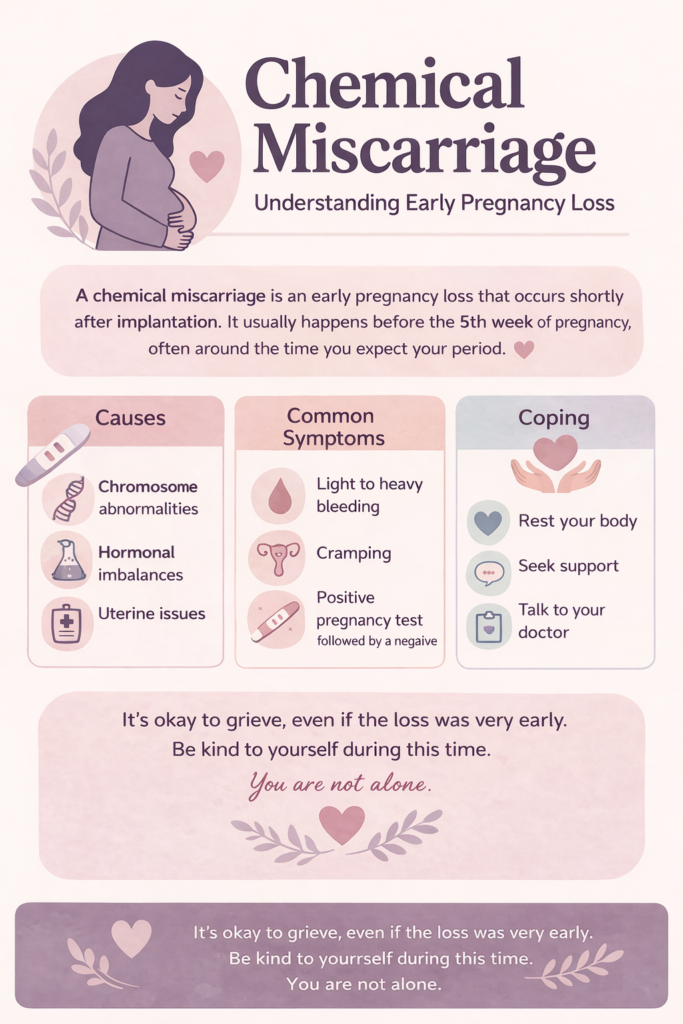
A chemical miscarriage is an early pregnancy loss that occurs shortly after implantation, typically before the fifth week of pregnancy.
In a normal pregnancy, a fertilized egg implants in the uterus and begins producing the hormone human chorionic gonadotropin (hCG), which is detected by pregnancy tests. In a chemical pregnancy, implantation occurs, but the embryo stops developing very early.
Because of this:
- You may get a positive pregnancy test
- But no gestational sac is visible on ultrasound
- The pregnancy ends before clinical confirmation
Many women only realize they had a chemical miscarriage if they test early.
Why Is It Called a “Chemical” Pregnancy?
The term “chemical” refers to the fact that the pregnancy is identified only through biochemical means, specifically hormone levels (hCG), rather than physical evidence seen on an ultrasound.
This doesn’t make the loss any less real—it simply describes how early it occurs in the pregnancy timeline.
How Common Is Chemical Miscarriage?
Chemical miscarriages are more common than many people realize.
Research suggests:
- They may account for 50% to 75% of all miscarriages
- Many occur before a woman even knows she is pregnant
- Increased early testing has made them more noticeable
In many cases, what seems like a slightly delayed or heavier period may actually be an early pregnancy loss.
Signs and Symptoms of a Chemical Miscarriage
Because it happens very early, the symptoms can be subtle and easily mistaken for a normal menstrual cycle.
Common Signs Include:
- A positive pregnancy test followed by a negative result
- Vaginal bleeding around the time of your expected period
- A heavier or slightly delayed period
- Mild abdominal cramping
- Passing small clots
What Makes It Different from a Regular Period?
- The bleeding may be slightly heavier or lighter than usual
- You may notice a shorter cycle after a positive test
- Hormonal symptoms (like breast tenderness) may briefly appear
However, some women experience no noticeable symptoms at all.
What Causes a Chemical Miscarriage?
In most cases, a chemical miscarriage is not preventable and is not caused by anything you did.
1. Chromosomal Abnormalities
The most common cause is genetic abnormalities in the embryo. If the embryo has missing or extra chromosomes, it cannot develop properly.
2. Hormonal Imbalances
Low levels of progesterone can affect the ability of the uterus to support early pregnancy.
3. Implantation Issues
Sometimes, the fertilized egg does not implant securely into the uterine lining.
4. Uterine Abnormalities
Structural issues such as fibroids or scar tissue may interfere with implantation.
5. Thyroid Disorders
Conditions like hypothyroidism or hyperthyroidism can impact early pregnancy development.
6. Infections (Less Common)
Certain infections may contribute to early pregnancy loss, though this is less frequent.
Is It Your Fault?
One of the most important things to understand is this:
A chemical miscarriage is not your fault.
It is a natural biological process where the body ends a pregnancy that is not developing normally. Everyday activities such as exercise, stress, or lifting objects do not cause chemical miscarriages.
Letting go of guilt is an essential part of emotional healing.
Emotional Impact of Early Pregnancy Loss
Even though a chemical miscarriage happens early, the emotional experience can be complex.
You may feel:
- Shock or confusion
- Disappointment or grief
- Anxiety about trying again
- A sense of loss, even if the pregnancy was very early
Some women also feel uncertain about whether their feelings are “valid” because the pregnancy wasn’t clinically confirmed. But emotional responses are personal and valid regardless of timing.
Talking to a partner, friend, or healthcare provider can help process these feelings.
Does a Chemical Miscarriage Affect Future Fertility?
In most cases, a chemical miscarriage does not affect your ability to conceive again.
In fact, it can indicate that:
- Fertilization occurred successfully
- Implantation began
Many women go on to have healthy pregnancies after a chemical miscarriage, often within the next few cycles.
When to Be Concerned
You may need medical evaluation if:
- You experience repeated chemical miscarriages
- You have known hormonal or thyroid issues
- You’ve been trying to conceive for an extended period without success
A healthcare provider may recommend blood tests, hormone evaluations, or imaging studies.
How Is a Chemical Miscarriage Diagnosed?
A chemical miscarriage is usually identified through:
- Early positive pregnancy test results
- Followed by decreasing hCG levels
- Absence of a gestational sac on ultrasound
Because it resolves naturally, many women do not require medical intervention.
When Can You Try Again?
In most cases, you can try to conceive again as soon as you feel physically and emotionally ready.
Many healthcare providers suggest:
- Waiting until after one normal menstrual cycle (for dating purposes)
- Ensuring emotional readiness before trying again
There is no strong evidence that waiting longer improves outcomes after a chemical miscarriage.
When Should You See a Doctor?
Seek medical advice if you experience:
- Very heavy bleeding (soaking through pads quickly)
- Severe abdominal pain
- Fever or signs of infection
- Repeated early pregnancy losses
Professional guidance can help identify any underlying concerns.
Coping and Emotional Healing
Healing after a chemical miscarriage is not just physical—it’s emotional too.
Helpful Coping Strategies:
- Acknowledge your feelings without judgment
- Talk openly with someone you trust
- Avoid self-blame
- Seek professional support if needed
- Give yourself time before trying again
Everyone processes loss differently. There is no “right” way to feel.
Preventing Chemical Miscarriages: Is It Possible?
Because most chemical miscarriages are caused by chromosomal abnormalities, they cannot usually be prevented.
However, maintaining overall reproductive health may support future pregnancies:
- Eat a balanced, nutrient-rich diet
- Manage stress levels
- Maintain a healthy weight
- Monitor thyroid and hormonal health
- Take prenatal vitamins (with folic acid)
These steps support general fertility but cannot guarantee prevention.
Key Takeaways
- A chemical miscarriage is an early pregnancy loss before 5 weeks
- It is often detected only through a pregnancy test
- Most cases are caused by chromosomal abnormalities
- It is common and usually not preventable
- It does not typically affect future fertility
- Emotional impact is real and valid
A chemical miscarriage is a very early pregnancy loss that often goes unnoticed, yet it can carry significant emotional weight. Understanding that it is common and usually beyond your control can help ease feelings of guilt or confusion.
For most women, this experience does not affect future fertility, and many go on to have healthy pregnancies. With the right information, support, and self-compassion, healing—both physical and emotional—is entirely possible.