
Pregnancy is an exciting journey filled with physical, emotional, and hormonal changes. Among the most talked-about experiences are pregnancy cravings, those sudden, sometimes overwhelming desires for specific foods. Whether you’re craving juicy mangoes at midnight, salty potato chips, creamy ice cream, or even unusual combinations like pickles and peanut butter, you’re not alone.
In fact, studies suggest that 50–90% of pregnant women experience food cravings at some point during pregnancy. While cravings are completely normal, many expectant mothers wonder why they happen, whether they indicate a nutritional deficiency, and how to satisfy them without compromising their health or their baby’s development.
This comprehensive guide explains everything you need to know about pregnancy cravings, including when they start, why they occur, the most common cravings by trimester, healthy ways to manage them, and when unusual cravings may require medical attention.
What Are Pregnancy Cravings?
Pregnancy cravings are intense urges to eat specific foods or flavors during pregnancy. Unlike ordinary hunger, cravings are often very particular. You may suddenly want chocolate, fresh fruit, spicy noodles, or a favorite childhood snack.
These cravings can vary greatly from person to person. Some women experience only mild cravings, while others find themselves thinking about certain foods throughout the day.
Pregnancy cravings can involve:
- Sweet foods
- Salty snacks
- Sour foods
- Spicy meals
- Dairy products
- Fresh fruits
- Carbohydrate-rich foods
- Cold or frozen treats
Not every pregnant woman experiences cravings, and that’s perfectly normal too.
When Do Pregnancy Cravings Start?
Most women begin noticing cravings during the first trimester, often between weeks 5 and 12. As pregnancy hormones increase, food preferences may change dramatically.
Many women report that cravings become strongest during the second trimester, when morning sickness begins to improve and appetite returns. By the third trimester, cravings may either continue or gradually decrease as the growing baby leaves less room in the stomach.
A general timeline looks like this:
First Trimester
- Cravings begin
- Food aversions are common
- Morning sickness may affect appetite
Second Trimester
- Strongest cravings
- Increased appetite
- Greater nutritional demands
Third Trimester
- Continued cravings for comfort foods
- More frequent hunger due to baby’s growth
- Increased need for balanced nutrition
Why Do Pregnancy Cravings Happen?
Although researchers still don’t know the exact cause, several factors likely contribute to pregnancy cravings.
1. Hormonal Changes
Pregnancy hormones, especially estrogen and progesterone, affect your senses of taste and smell. Foods you once loved may suddenly seem unpleasant, while previously ignored foods become irresistible.
These hormonal changes also influence brain chemicals that regulate appetite and reward, making certain foods feel especially satisfying.
2. Increased Nutritional Needs
Pregnancy increases your body’s demand for nutrients such as:
- Iron
- Calcium
- Protein
- Folate
- Magnesium
- Healthy fats
While cravings don’t always indicate a nutrient deficiency, your body is working harder to support your baby’s growth and may naturally encourage you to eat more.
3. Enhanced Sense of Smell and Taste
Many pregnant women notice that smells become much stronger.
This heightened sensitivity can make some foods incredibly appealing while making others completely intolerable.
4. Emotional Comfort
Pregnancy can bring emotional ups and downs.
Foods associated with comfort, family traditions, or positive memories may become particularly appealing during stressful or emotional moments.
5. Cultural and Psychological Influences
Culture also plays an important role in pregnancy cravings.
Different countries report different favorite cravings, suggesting that personal habits, traditions, and food availability influence what pregnant women crave.
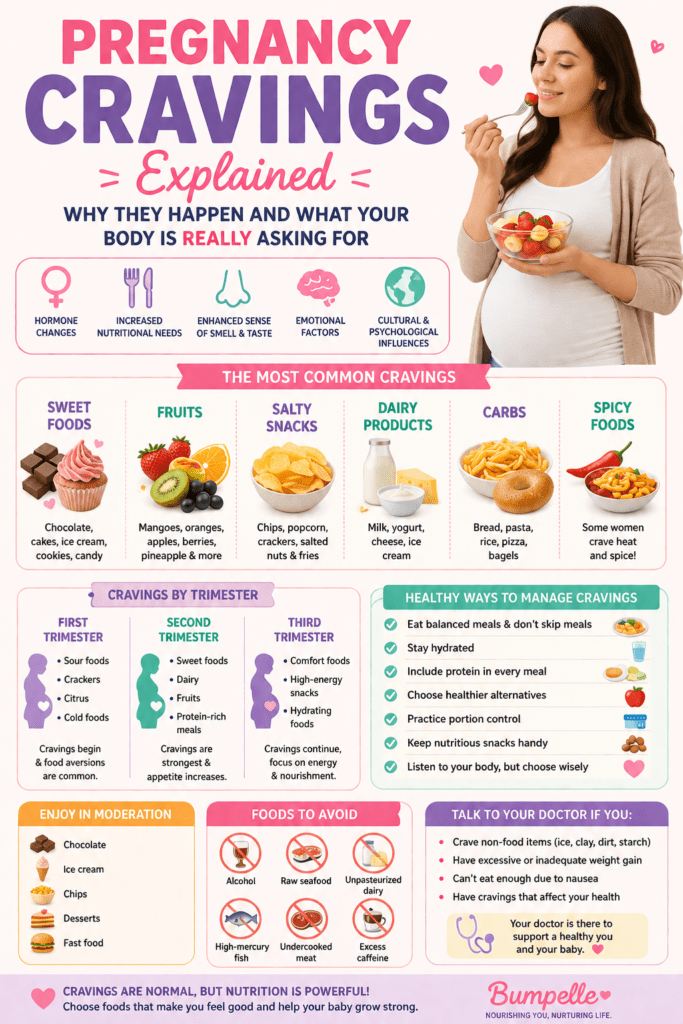
The Most Common Pregnancy Cravings
Every pregnancy is unique, but certain cravings are consistently reported around the world.
Sweet Foods
Many women crave:
- Chocolate
- Ice cream
- Cakes
- Cookies
- Candy
These foods provide quick energy but should be enjoyed in moderation to avoid excessive sugar intake.
Fresh Fruit
Fruit is among the healthiest pregnancy cravings.
Popular choices include:
- Mangoes
- Watermelon
- Apples
- Oranges
- Strawberries
- Pineapple
- Grapes
Fruit provides vitamins, minerals, antioxidants, and hydration.
Salty Snacks
Common salty cravings include:
- Potato chips
- Popcorn
- French fries
- Salted nuts
- Crackers
Salt cravings may relate to increased blood volume during pregnancy, though excessive sodium intake should still be avoided.
Dairy Products
Many pregnant women crave:
- Milk
- Yogurt
- Cheese
- Ice cream
These foods are rich in calcium and protein, both essential for your baby’s developing bones.
Carbohydrates
Foods like:
- Bread
- Pasta
- Rice
- Pizza
- Bagels
can be comforting and easy to digest, especially during early pregnancy.
Spicy Foods
Some women develop a stronger preference for spicy foods, while others become more sensitive to them.
If spicy foods don’t cause heartburn or stomach discomfort, they are generally safe during pregnancy.
Pickles
Pickles have become one of the most famous pregnancy cravings.
Their salty, sour flavor may be especially appealing due to changes in taste perception during pregnancy.
Do Pregnancy Cravings Mean Your Body Needs Certain Nutrients?
One of the biggest myths about pregnancy cravings is that they always indicate a nutritional deficiency.
While some cravings may loosely reflect your body’s changing needs, research shows that cravings are influenced by many factors—not just nutrient levels.
For example:
| Craving | Possible Nutrient |
|---|---|
| Dairy | Calcium |
| Red meat | Iron and protein |
| Citrus fruits | Vitamin C |
| Nuts | Healthy fats and magnesium |
| Beans | Protein and folate |
However, craving chocolate does not necessarily mean you are low in magnesium, and craving ice cream doesn’t automatically indicate a calcium deficiency.
Instead of relying on cravings alone, maintaining a balanced diet and taking prenatal vitamins as recommended by your healthcare provider is the best way to meet your nutritional needs.