
If you are managing symptoms of Polycystic Ovary Syndrome, you’ve likely come across birth control pills as a treatment option. They are one of the most commonly prescribed medications for PCOS-related hormonal imbalance, especially for regulating periods, acne, and excess hair growth.
But are they the right choice for everyone? And what are the real pros and cons?
This guide breaks everything down in a clear, evidence-based way so you can understand how birth control pills work in PCOS, their benefits, limitations, and who they are best suited for.
What Are Birth Control Pills and Why Are They Used in PCOS?
Birth control pills (also called oral contraceptives) usually contain a combination of estrogen and progestin hormones. In PCOS, they are not prescribed primarily for contraception—they are used for hormonal regulation.
How they work in PCOS:
- Suppress ovulation (reducing hormone fluctuations)
- Lower androgen (male hormone) levels
- Regulate menstrual cycles
- Protect the uterine lining from overgrowth
In simple terms, they “reset” hormonal rhythm artificially, which helps manage symptoms.
However, they do not address the root metabolic issue behind PCOS, such as insulin resistance.
Key Benefits of Birth Control Pills for PCOS
Birth control pills are often considered a first-line treatment for symptom control. Here are their main advantages:
1. ✔️ Regulates Irregular Periods
One of the most frustrating PCOS symptoms is unpredictable or absent periods.
Birth control pills:
- Create a regular monthly cycle
- Reduce skipped or delayed periods
- Help maintain hormonal balance
This is especially important because irregular cycles over time can increase the risk of uterine lining thickening.
2. ✔️ Improves Acne and Oily Skin
High androgen levels in PCOS often lead to:
- Persistent acne (especially jawline and chin acne)
- Oily skin
- Cystic breakouts
Birth control pills help by:
- Reducing androgen production from ovaries
- Increasing sex hormone-binding globulin (SHBG)
- Lowering free testosterone levels
Results typically appear after 3–6 months of consistent use.
3. ✔️ Reduces Excess Hair Growth (Hirsutism)
Unwanted facial or body hair growth is another common symptom.
Birth control pills can:
- Slow down new hair growth
- Reduce androgen-driven stimulation of hair follicles
- Improve overall hormonal balance
However, existing thick hair may take longer to improve and sometimes requires additional treatment.
4. ✔️ Protects the Uterus
When ovulation does not occur regularly, the uterine lining may build up excessively.
Birth control pills:
- Ensure regular shedding of the uterine lining
- Reduce risk of endometrial hyperplasia
- Provide long-term uterine protection
This is a medically important benefit often overlooked.
5. ✔️ Predictable Cycles Improve Quality of Life
Many women with PCOS struggle with uncertainty around periods.
Pills help:
- Make cycles predictable
- Reduce anxiety about missed periods
- Improve planning for daily life or events
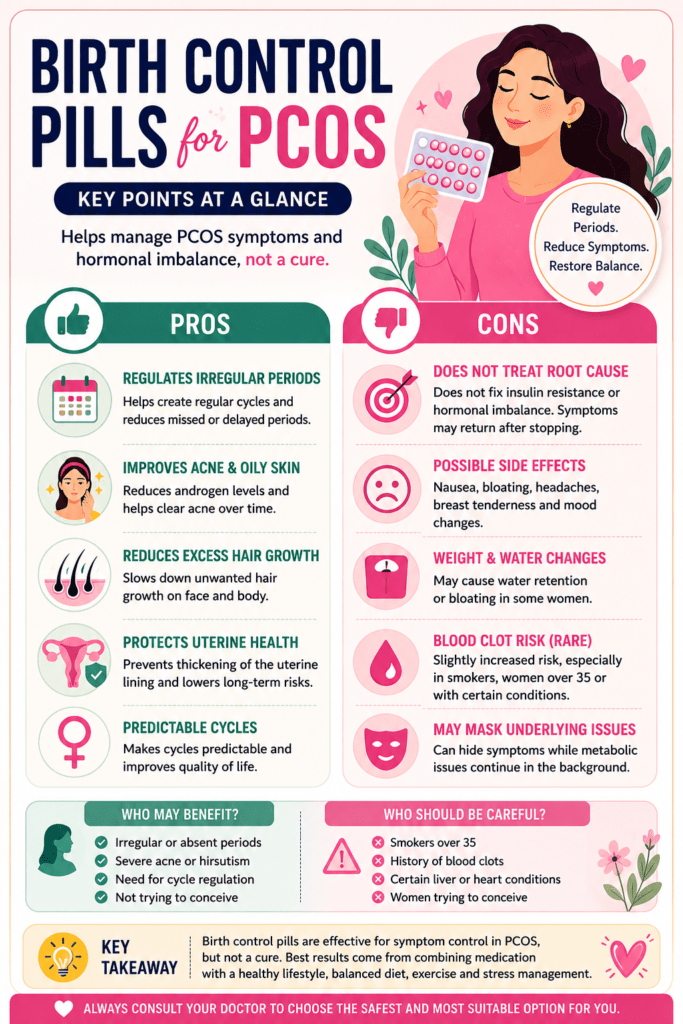
Side Effects and Limitations of Birth Control Pills in PCOS
While effective for symptom control, they are not without drawbacks.
1. ❗ Do Not Treat the Root Cause
This is the most important limitation.
Birth control pills:
- Do NOT fix insulin resistance
- Do NOT cure PCOS
- Only control symptoms temporarily
Once stopped, symptoms often return if underlying issues are not managed.
2. ❗ Possible Side Effects
Not everyone experiences side effects, but some may include:
- Nausea
- Headaches
- Breast tenderness
- Bloating
- Mood changes
These effects often improve after a few weeks, but not always.
3. ❗ Emotional and Mood Changes
Hormonal shifts can affect brain chemistry in sensitive individuals:
- Increased irritability
- Low mood or emotional sensitivity
- Reduced libido in some cases
This varies widely from person to person.
4. ❗ Weight and Water Retention Concerns
A common concern is weight gain. Scientifically:
- Pills do NOT directly cause fat gain in most cases
- Some users may experience:
- Water retention
- Increased appetite
- Temporary bloating
Lifestyle factors usually play a bigger role than the pill itself.
5. ❗ Rare but Serious Risk: Blood Clots
Combined oral contraceptives slightly increase the risk of blood clots.
Risk is higher in:
- Smokers (especially over 35)
- Women with clotting disorders
- Those with certain cardiovascular conditions
This is why medical screening is important before starting.
6. ❗ May Mask Ongoing Hormonal Imbalance
Because symptoms improve externally, underlying PCOS may remain unmanaged:
- Insulin resistance may progress silently
- Metabolic health may worsen without lifestyle changes
Who Are Birth Control Pills Best For?
They are typically recommended for women who:
- Are not currently trying to conceive
- Have irregular or absent periods
- Experience moderate to severe acne or hirsutism
- Need reliable cycle regulation
They are often part of a symptom management plan, not a standalone treatment.
Who Should Be Careful or Avoid Them?
Medical professionals may avoid prescribing them for:
- Smokers over 35
- History of blood clots or stroke
- Certain liver conditions
- Uncontrolled hypertension
- Women actively trying to conceive
A proper medical evaluation is essential before starting.
Birth Control Pills vs Long-Term PCOS Management
Birth control pills control symptoms, but long-term improvement in PCOS usually requires:
- Balanced, low-glycemic diet
- Regular physical activity
- Weight management (if applicable)
- Insulin resistance control strategies
- Stress and sleep regulation
In many cases, pills are used alongside lifestyle interventions, not instead of them
Final Takeaway
Birth control pills can be a highly effective tool for managing symptoms of PCOS, especially irregular periods, acne, and excess hair growth. However, they do not cure the condition or address its metabolic roots.
The most effective approach is usually symptom control + lifestyle management + long-term hormonal health support.
If you are considering birth control pills for PCOS, it is important to discuss your symptoms, medical history, and fertility goals with a healthcare provider to choose the safest and most suitable option.